NASA's Lunar Surface Technology: What It Means for You
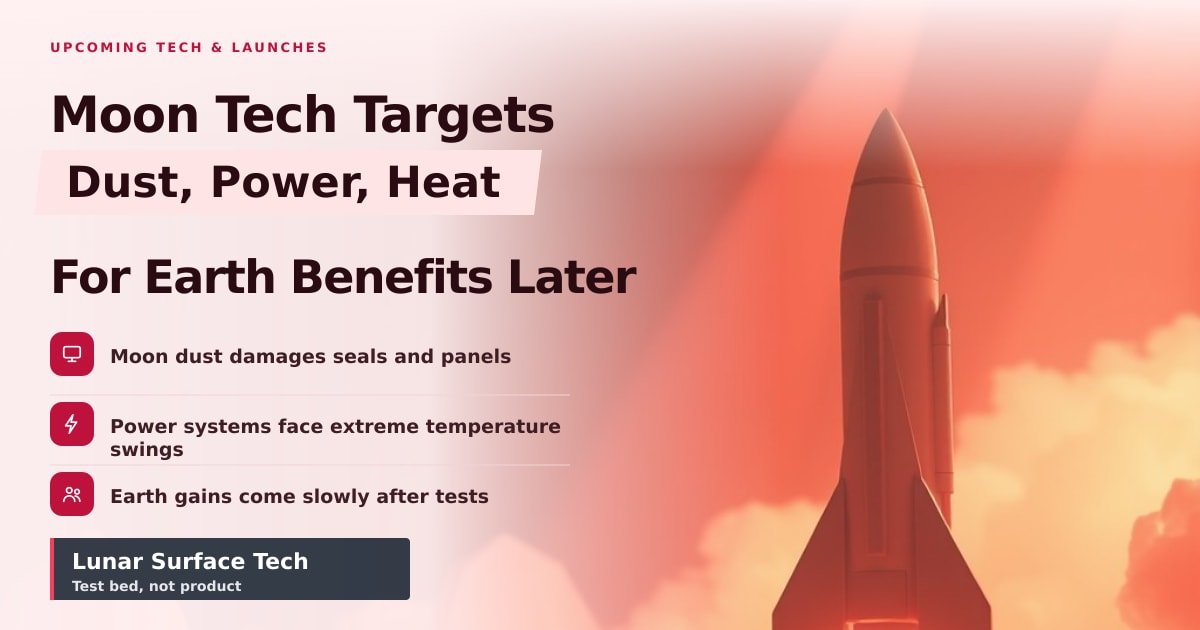
TL;DR: NASA's lunar surface technology work is about solving moon problems: dust, power, heat, communications and safe landings. The payoff for you is not a moon gadget on sale tomorrow. It is the tools, materials and robots that may reach everyday life years later.
A moon rover's biggest enemy is not the cold. It is the grey dust that sticks to every lens, seal and solar panel. NASA's lunar surface technology program exists because that dust, plus power limits and brutal temperature swings, can stop a mission. The agency's public pages describe a wide set of engineering problems, not a single product you can buy.
What lunar surface technology actually means
NASA's moon work is not one device. It covers landers, spacesuits, power systems, communications, robots and habitats. Each part has to survive weeks or months with no repair shop nearby.
Moon dust is a good example. It is sharp, clingy and hard to clean. If it coats a solar panel, power drops. If it gets into a joint, a robot can jam. Engineers must design seals, filters and cleaning methods that work in a place where a simple screwdriver is not an option.
For you, the useful takeaway is simple: space tech is mostly maintenance under extreme conditions. The best ideas often look boring on Earth, such as a better seal, a tougher battery or a sensor that keeps working after years of abuse.
Why moon dust and power matter to ordinary readers
Dust control sounds distant until you see where it leads. Factories use filters to protect machines. Hospitals use sealed devices to keep out fluids and dirt. Remote sensors need small power systems that survive heat, cold and neglect. The moon is a hard test lab for all of those problems.
Power is the second bottleneck. A lunar night is long and cold, so batteries and solar arrays must work with little human help. That pressure can push better designs for backup power, low-power electronics and self-checking software. Do not expect a direct spin-off next week. The path from a NASA test to a shop shelf is slow and uneven.
The bigger picture: a test bed, not a product launch
NASA often frames the moon as a step toward Mars. That is true, but the more useful frame is that the moon is a test bed. It forces engineers to build systems that cannot be fixed by a quick trip to the store. That pressure can create better design habits.
The hype risk is real. A lab demo is not a ready product, and a render is not a test result. Watch for long dust tests, repeated hot and cold cycles, and robots that can work with little human help. Those are the signals that matter.
What to watch next
Three things will show whether this work is moving: hardware that survives long tests, power systems that keep working after repeated temperature swings, and robots that need fewer people to operate them. You should also watch how NASA shares data and parts with companies. That is how space tech becomes Earth tech.
For now, treat the story as an early signal. NASA is naming the problems it must solve before people can work on the moon. The useful products will come later, and only if the tests hold up.
Key Takeaways
- NASA's lunar surface technology is a set of solutions, not one product.
- Moon dust is a major enemy because it damages seals, lenses and solar panels.
- The most likely Earth benefits are better filters, seals, power systems and robots.
- Treat lab demos as early steps; wait for long tests and real mission results.
Frequently Asked Questions
What is lunar surface technology?
It is the hardware and software that helps people and robots work on the moon. That includes landers, suits, power, communications and dust control.
Why is moon dust a problem for technology?
Moon dust is sharp and clingy. It can scratch glass, jam moving parts and block solar panels, so equipment must be sealed and easy to clean.
Will this help everyday life on Earth?
Not directly or quickly. But the materials, sensors, seals and robots built for the moon can later improve factories, medical devices and remote power systems.
Sources
How did this story feel?
Be the first to react
AI assistance. This article was researched and drafted with AI tools and reviewed by our editorial team before publication. We link to sources at the end of every article so you can verify the claims. If you spot an error, please let us know.
Recommended gear
Popular tech picks
Samsung Galaxy S25 Ultra
6.9" AMOLED · 200MP · 5000mAh
Editor's pickView on Amazon →
Apple MacBook Air 13-inch (M4)
M4 · 16GB · 13.6" Liquid Retina
Editor's pickView on Amazon →
Sony WH-1000XM5
Over-ear ANC · 30h battery
Best headphonesView on Amazon →Affiliate links: we may earn a commission at no extra cost to you.
More on #nasa
Weekly tech brief
The tech stories worth your time, every Sunday.
One short email with the most useful guides and gadget picks from the week. No spam, unsubscribe anytime.
Written by
TechPulse TeamThe TechPulse editorial team publishes clear, practical technology guides. Every article is original and written to be understood — not just skimmed. Read our editorial policy.
Comments (0)
No comments yet — start the conversation!
Keep reading
Upgrade or Rebrand? How to Tell What's Real
Most launches are small changes with big marketing. Here's a three-question test that tells you whether a new device is genuinely better or just renamed.
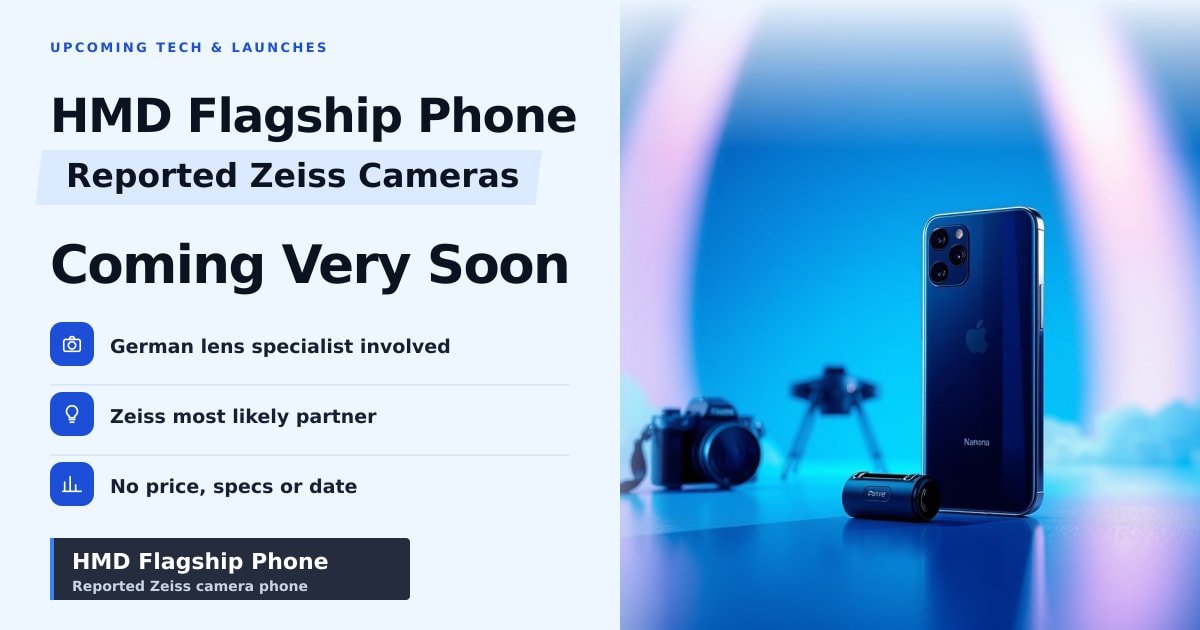
HMD Flagship Phone to Get Zeiss-Branded Cameras Soon
HMD is reportedly close to launching a flagship phone with cameras tuned by a German lens specialist. Here's what's confirmed and what isn't.
Smartphone Facial Scanning Has Real Accuracy Limits
TL;DR: A new report says smartphone facial scanning falls short of pediatric stereophotogrammetry, a specialized 3D imaging method for children’s faces. That…