
Q3 smartphone shipments hit 2013 low: what it means for buyers
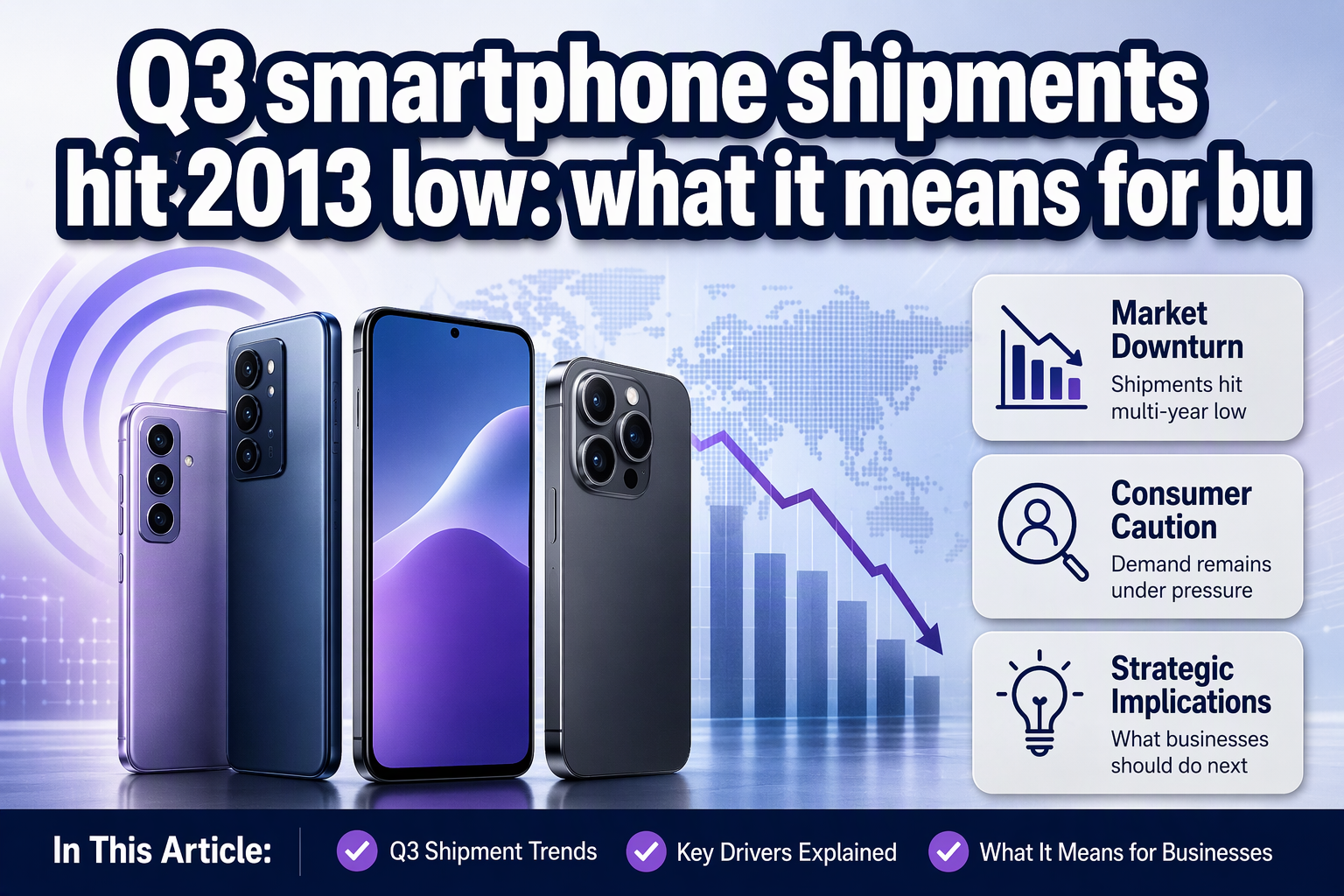
TL;DR: Q3 smartphone shipments fell 20% year on year, the weakest third-quarter total since 2013. That points to a market stuck in a long upgrade slump, not a sudden collapse in your need for a phone. Expect more discounts and pressure on mid-range models, but don't expect a must-buy leap just because a new handset arrives.
A 20% drop sounds dramatic. It is. But the more useful question is why so many people are sitting out the usual upgrade carousel—and what that means for the price you'll pay when you finally replace your phone.
Q3 smartphone shipments: what's actually happening
The headline number is blunt: shipments down 20% from a year earlier, and the lowest third-quarter total since 2013. Shipments measure phones moving from factories to retailers and carriers, not every handset landing in a pocket. Still, a weak reading that deep tells you the channel isn't hungry. Vendors, distributors and carriers are ordering fewer units, not just selling fewer.
That matters because smartphones are a mature product category. A shipment slump doesn't mean people have stopped using phones. It means they're not replacing them on the old rhythm. The industry spent years assuming a steady upgrade treadmill. This Q3 number says that treadmill is sputtering.
Why the slump lands on your wallet
When shipments fall, the first reaction is usually caution: fewer new models, tighter stock, louder promotions to clear old ones. You may see better trade-in offers, carrier deals and mid-cycle discounts—especially on mid-range handsets where volume matters most. You may also see fewer oddball budget experiments, because brands get conservative when the market shrinks.
There's a flip side. If demand stays soft, companies may push harder on premium models to protect revenue. That can mean more expensive flagships with marginal upgrades, and more marketing telling you that last year's phone is obsolete. It isn't. For most people, a two- or three-year-old handset still handles messaging, maps, photos and payments. The real question is battery health, storage and security updates.
The bigger picture: a longer upgrade cycle
A third-quarter total this low hasn't been seen since 2013. That's a striking marker because 2013 was a very different era: smartphones were still spreading fast in many markets, and replacement cycles were shorter. Today, the market is saturated. Improvements are incremental. Refurbished and trade-in options are more accepted. Economic caution adds another brake.
This isn't a vote against smartphones; it's a vote against replacing one that still works. The pressure now sits on the mid-range, where buyers are most price-sensitive. If you're shopping, don't let a weak market convince you that a new phone is automatically a smart buy. Fix the battery, clear some storage, check update support. Buy when the old device actually fails your needs—not when a launch event says so.
What to watch next
The next few quarters will show whether this is a one-off inventory reset or the new normal. Watch entry-level and mid-tier pricing first; that's where shipment volume lives. Watch trade-in values and repair costs, too. A market that recovers only through deep discounts is clearing stock, not getting healthy.
For readers, the practical advice is simple: compare total cost, not launch hype. A discounted older flagship with solid update support often beats a full-price mid-ranger. And if you can wait, waiting is not a failure—it's a negotiating position.
Key Takeaways
- Q3 smartphone shipments fell 20% year on year, the lowest third-quarter total since 2013.
- The drop reflects a mature market, longer upgrade cycles and cautious channel ordering.
- Weak demand can bring better deals, but also more premium-price pressure.
- Buy on battery, storage and update support—not on launch-day urgency.
Frequently Asked Questions
Why are smartphone shipments falling?
Will smartphone prices drop?
Is now a good time to buy a phone?
How did this story feel?
Be the first to react
Recommended gear
Related picks for this guide

Samsung Galaxy S25 Ultra
6.9" AMOLED · 200MP · 5000mAh
Editor's pickView on Amazon →
Google Pixel 9a
6.3" OLED · Tensor G4 · 7-year updates
Best valueView on Amazon →Affiliate links: we may earn a commission at no extra cost to you.
Written by
TechPulse Team
The TechPulse editorial team publishes clear, practical technology guides. Every article is original and written to be understood — not just skimmed.
Comments (0)
No comments yet — start the conversation!
Keep reading
Gorilla Glass vs Reality: 6 Weeks, 4 Phones, Real Scratches
Six weeks, four phones, one sandy bag. Here's what Gorilla Glass really protects you from, and why a cheap protector still makes sense.

Galaxy Z Fold8 Ultra: Is This As Good As Foldables Get?
A reviewer calls the Galaxy Z Fold8 Ultra close to perfect. Here's the plain-English read on what's improved, what still bugs people, and whether to wait.
Galaxy Z Fold8 Ultra Review: Worth the Money?
A rave review doesn't settle it. Here's what the Galaxy Z Fold8 Ultra means for your wallet and your daily habits.