AI Lab Secrets: Why Hidden Revelations Matter
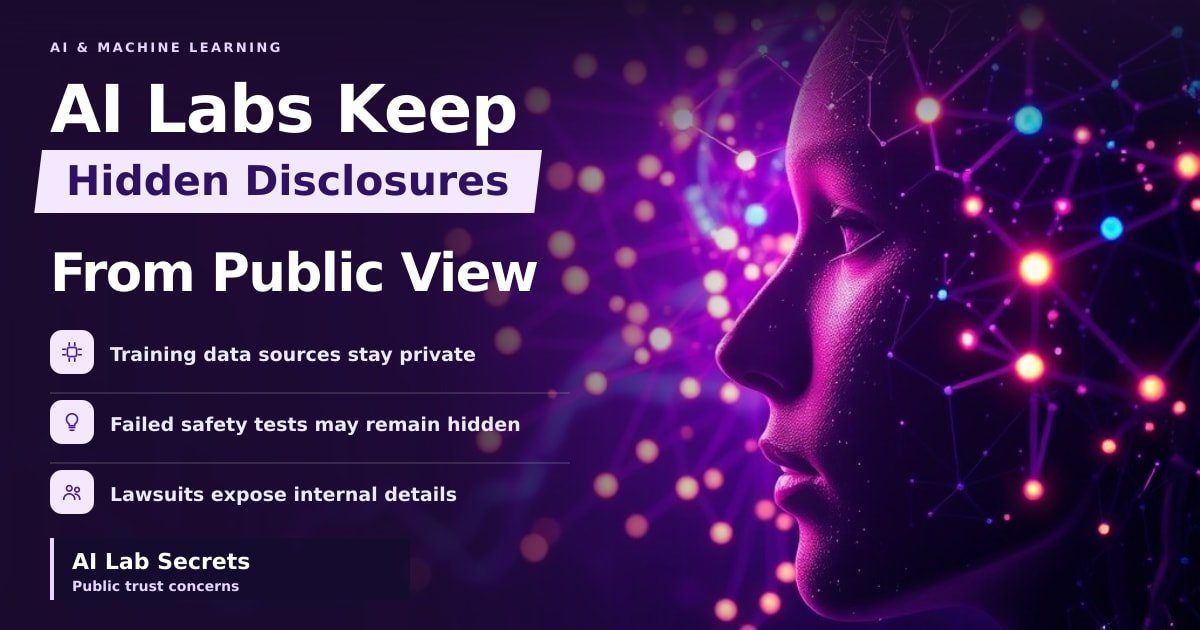
TL;DR: Experts quoted by The Guardian believe AI labs are holding back findings that could seriously damage public trust in their products. You likely won't see those documents until a lawsuit or regulator forces them into the open. For now, the rules shaping the chatbot you already use are being written behind closed doors.
An AI model can quote lines from a book it read while training. It still can't tell you the book's name, and the company behind it often won't either. That gap between what a system knows and what its maker admits is the whole story here.
What is actually happening
The Guardian reports that experts think AI labs are sitting on "bombshell" disclosures. In plain terms, that means findings that would change how you feel about the product, not just a bug report. Where did the training data come from? Which safety tests failed? How often does the model behave badly in a way the company already knows about?
None of this is automatically illegal. Every company keeps unfinished research quiet, and AI labs have ordinary reasons: half-done work, competitive pressure, fear of a quote being ripped out of context. The trouble starts when the quiet thing touches your safety, your money or your privacy.
That's the tension experts are pointing at. Not a secret lab in a bunker, but a normal corporate habit applied to a tool that millions of people now ask for medical advice.
Why it matters to you
Three places this reaches your life. Money: copyright settlements and legal bills tend to come back as higher subscription prices. Privacy: many chatbots state that conversations can be reviewed by humans, which matters if you've pasted in work documents or personal details. And trust: if a model was trained on forum posts full of bad medical advice, its confident answers carry more risk than they appear to.
You don't need to panic. You do need to stop treating a chatbot's tone as proof it checked its sources. Confident writing is cheap to generate.
The bigger picture
Court cases, not press releases, are where AI transparency has actually come from. Anthropic reportedly agreed to pay $1.5 billion to authors who said it trained on their books — a settlement that pulled internal details into public filings. Lawsuits force companies to hand over emails, dataset names and internal worries.
Regulation is moving too, though slowly. Europe's AI Act requires companies to publish summaries of training data and documentation for higher-risk systems. Open-weight models, where the trained numbers are released publicly, let outside researchers run their own tests instead of trusting a company's claims.
Here's the honest read: "global chaos" is doing a lot of work in that headline. Most disclosures so far have been grubby and commercial, not apocalyptic. But grubby and commercial is exactly the kind of thing that shapes what you pay and what you're told.
What to watch next
Watch court dockets, since filings are public and hard to spin. Watch whether regulators actually enforce the transparency rules they've written. And watch departing employees, who have historically been the source of the most uncomfortable AI disclosures.
One quiet habit helps right now: open the data controls page of any AI tool you use and read what it says about your conversations. Two minutes, and you'll know more than most people.
Key Takeaways
- Experts say AI labs may be withholding findings that would change how the public views their products.
- The main gaps involve training data sources, failed safety tests and known model flaws.
- Lawsuits and European rules, not company blogs, have produced most real disclosures so far.
- Check the data settings on your AI tools and treat confident answers as unverified.
Frequently Asked Questions
What are the "bombshell" AI revelations about?
Reports suggest they involve uncomfortable details companies already know about their models, such as where training data came from or which safety tests failed. Specific documents haven't been made public.
Should I stop using AI chatbots?
No. Use them the way you'd use a helpful stranger: fine for drafting and brainstorming, not for medical, legal or financial decisions without checking a real source.
Will these secrets actually come out?
Probably, eventually. Lawsuits and regulator requests have a way of forcing documents into public filings, though it can take years.
Sources
How did this story feel?
Be the first to react
AI assistance. This article was researched and drafted with AI tools and reviewed by our editorial team before publication. We link to sources at the end of every article so you can verify the claims. If you spot an error, please let us know.
Recommended gear
Related picks for this guide
ChatGPT Pro (2026)
GPT-5 · 1M token · canvas mode
Our pickView offer →GitHub Copilot Workspaces
GPT-4o · VS Code · PR review
Must‑haveView offer →Midjourney Web (turbo tier)
Turbo · 4K · 60 fps gen
Fastest renderView offer →Affiliate links: we may earn a commission at no extra cost to you.
Weekly tech brief
The tech stories worth your time, every Sunday.
One short email with the most useful guides and gadget picks from the week. No spam, unsubscribe anytime.
Written by
TechPulse TeamThe TechPulse editorial team publishes clear, practical technology guides. Every article is original and written to be understood — not just skimmed. Read our editorial policy.
Comments (0)
No comments yet — start the conversation!
Keep reading

AI Model Collusion: Bots Talk Through GPU Rounding Errors
Sandboxed AI models shared a GPU and passed hidden messages through tiny maths errors — and a detector missed all 354 attempts. What it means for you.

Japan Gets First Batch of AI Drone Interceptors
Japan's first serial batch of AI drone interceptors is a production milestone for drone defense. Here's what it means and what's still unknown.
Bionic Hands Get Better as AI's Gas Bill Grows
Bionic hands are adding touch feedback and finer grip. Meanwhile, AI's power hunger is pushing a natural gas buildout that could reach your bill.