
Cheap Appliances: The Bills That Show Up Later

TL;DR: Cheap appliances rarely stay cheap. The sticker price is maybe two-thirds of what you'll actually spend once electricity, repairs and an early replacement get added in. Buy budget on features — never on energy rating or service network.
My neighbour's ₹16,000 washing machine lasted three years and two repairs. The ₹27,000 one I bought in 2019 is still going. That gap isn't luck. It's arithmetic you can do before you hand over your card.
Not every budget appliance is a trap, and I'd hate to scare you off a genuinely good deal. But the hidden costs are real, and they're boring — which is exactly why nobody checks them in the showroom.
Where cheap appliances cost you more than the sticker
Three costs sit off the price tag: power, parts, and premature replacement. Add them up and a mid-range model often wins, even on a tight budget.
My rule: buying cheap is fine. Buying cheap service is not.
The energy bill is the sneaky one
Every fridge, AC and washing machine in India carries a BEE label with a units-per-year figure. Compare that number, not just the star count. At ₹8 a unit, 100 extra units a year is ₹800 — trivial once, ugly over eight years.
Two 250-litre fridges can look identical on the floor and differ by a hundred units a year or more on the label. You're paying that difference to your electricity company, every month, for the life of the machine.
Appliance repair costs add up fast
Cheap appliances often use parts only that brand makes, and only for two or three years. Then you're hunting a discontinued PCB at 11pm. (I've done this. Don't.)
Three things to check before you buy:
- Is there an authorised service centre within 10 km?
- Does the brand publish spare part prices?
- Is the compressor or motor warranty 10 years, or a token 2?
Extended warranties are usually a poor deal on a low-cost appliance — you're paying 15–20% of the purchase price to protect something cheap to replace. Skip it. Put the money toward a better model.
Buy budget without buying twice
- Spend on the motor, compressor or drum. Save on touchscreens, app control and "AI" modes you'll use once.
- Compare the units-per-year figure on two models ₹5,000 apart. If the cheaper one burns 100+ extra units annually, that "saving" evaporates in about six years.
- Confirm the service centre exists near you. A five-star brand with no local technician is a one-star experience.
- Buy last year's model when a new series lands. Same guts, 15–25% off. That's where budget appliances genuinely win.
Key Takeaways
- Sticker price is roughly two-thirds of true ownership cost.
- Compare units-per-year on the BEE label, not star ratings alone.
- A nearby authorised service centre beats brand advertising every time.
- Skip extended warranties; fund a better model instead.
Frequently Asked Questions
Are cheap appliances worth buying? Yes, on simple machines — kettles, mixer grinders, basic microwaves. Be cautious with anything that runs daily for years: fridges, washing machines, ACs.
How long should a washing machine last? Eight to ten years with normal use and decent water quality. A failure at year three is a design or service problem, not bad luck.
Is it cheaper to repair or replace? Once a repair crosses half the price of a new unit — and the appliance is past six years — replace it.
How did this story feel?
Be the first to react
Written by
TechPulse Team
The TechPulse editorial team publishes clear, practical technology guides. Every article is original and written to be understood — not just skimmed.
Comments (0)
No comments yet — start the conversation!
Keep reading
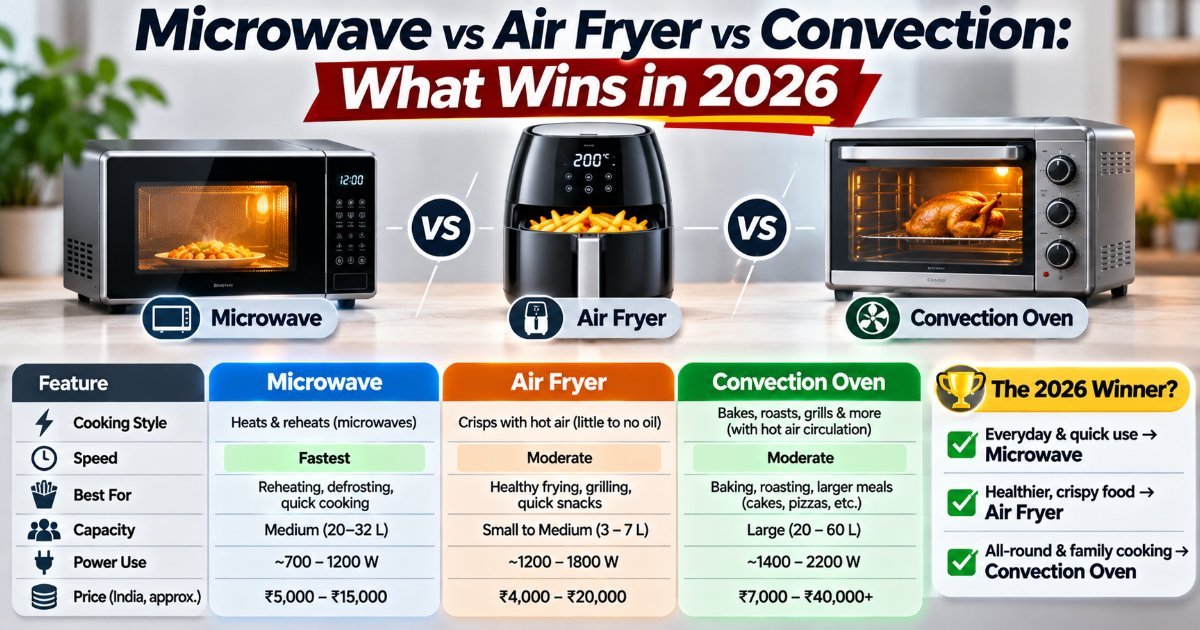
Microwave vs Air Fryer vs Convection: What Wins in 2026
Three appliances, one countertop, and a lot of overlap. Here's what each one genuinely does best in 2026 — and the combo you should probably skip.

Appliance Software Updates: Why They Matter Now
Your washing machine has firmware. Your oven has a network card. Here's how to keep appliance software updates from becoming a weekend project.

Appliance Lifespan: How Long Stuff Actually Lasts
Your grandmother's refrigerator ran for 30 years. Your fiveyearold washer just quit, and the repair quote is $700. What changed? Modern appliance lifespan is…