
How Noise-Cancelling Headphones Erase the World
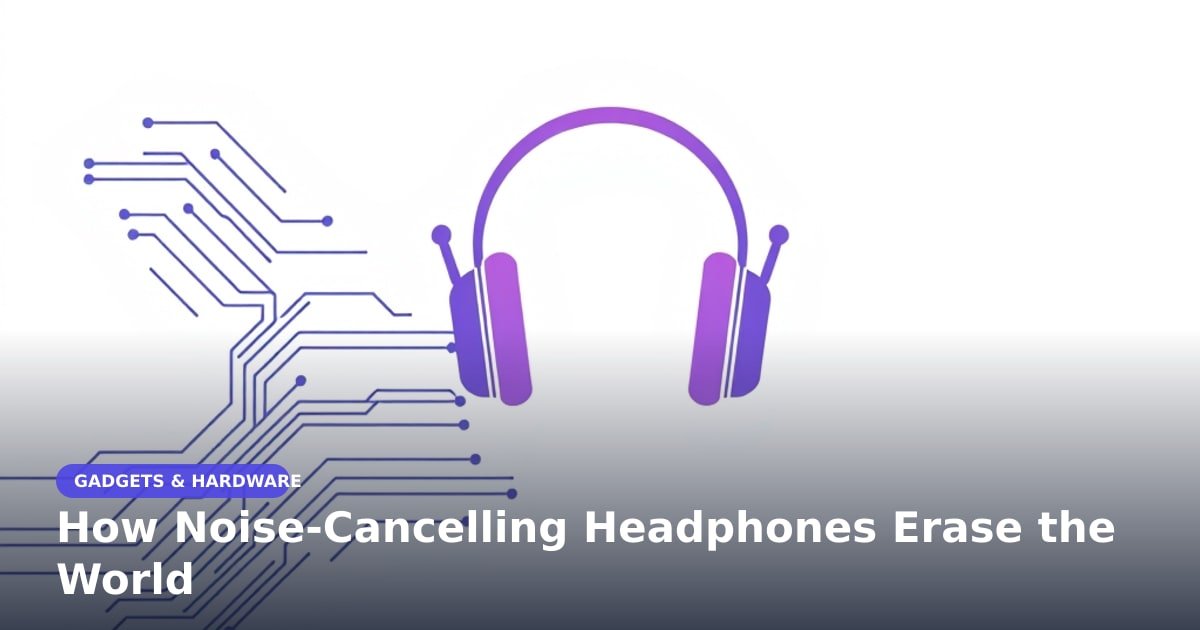
TL;DR: Noise-cancelling headphones use tiny microphones to listen to the noise around you, then play the exact opposite sound to cancel it out. That wipes out steady droning sounds like engines and fans, but not sharp ones like a crying baby. Fit matters as much as the electronics, so try before you buy.
You're on a long flight. You put the headphones on, press a button, and the engine roar drops to a soft hum. Nothing else about the plane changed. Just a switch.
That switch is doing something clever, and once you know how it works, you'll shop for headphones very differently.
How does noise cancelling work? The short version
Sound travels as waves of pressure in the air. Your brain reads those waves as noise, music or speech.
Active noise cancellation, or ANC, uses small microphones (tiny listening devices) built into the earcups. They sample the noise around you hundreds of times a second. A chip then builds the same wave flipped upside down, called anti-noise. The two waves meet and cancel out, so you hear quiet.
Think of two people pushing a swing in opposite directions at the same moment. Nothing moves. That's the whole trick, repeated thousands of times a second.
Why your voice still gets through
ANC works best on sounds that repeat steadily. Plane engines, train rumble, air conditioners and fan hum are easy targets.
A baby's cry, a clanking trolley or a colleague saying your name change too fast for the chip to mirror. Those still reach you.
The physical seal does the rest of the work. Memory foam pressing against your head blocks higher sounds, which is called passive isolation. Glasses, thick hair or a loose fit can quietly wreck that seal, and no chip can fix it. If your ANC feels weak, push the cups gently against your ears while music plays. Thicker bass and less noise means the seal was the problem.
The pressure feeling, wind and other catches
Some people notice a slight pressure in their ears, like the feeling on a plane. It comes from cancelling low sounds, and it's usually mild. Short sessions at first help most people adjust.
Wind is a weak spot. Outdoor microphones catch gusts and turn them into a thump or hiss. Models with a wind-noise mode handle this better, which matters if you walk or cycle with them.
How to choose noise-cancelling headphones
- Battery with ANC on. Makers quote the bigger number first. Expect roughly 20–30 hours on over-ear models with ANC running, not the 50 or 60 hours in the headline.
- Transparency mode. This pipes outside sound in through the mics, so you can order coffee without taking them off. Once you use it, you won't go back.
- Fit and weight. Over-ear cups seal better. Earbuds are easier to carry. Comfort decides whether you actually wear them.
- Price tiers. Around $99 gets you solid ANC (Soundcore Space One). Roughly $249 gets excellent earbuds (Apple AirPods Pro 2). At $400 and up you get the quietest options going (Sony WH-1000XM5, Bose QuietComfort Ultra). Past that, gains get small and expensive.
For flights and open offices, over-ear headphones usually win. For commutes and pockets, noise-cancelling earbuds are the better trade.
Key Takeaways
- ANC uses mics and chips to cancel steady noise, not sudden sounds.
- Fit and seal often matter more than the spec sheet.
- Check battery life with ANC switched on, not the headline figure.
- Transparency mode is the feature you'll use most day to day.
Frequently Asked Questions
Do noise-cancelling headphones block voices?
Not well. ANC targets steady low sounds like engines and fans. Voices change too fast, so you'll still hear them.
Is ANC bad for your ears?
No. There's no evidence it damages hearing, and at the same volume it's often gentler because you don't crank the music to drown out noise.
Are cheap noise-cancelling headphones worth it?
Yes, up to a point. Under about $100, expect real help with engine drone but weaker voice blocking and fewer features.
How did this story feel?
Be the first to react
Recommended gear
Related picks for this guide
Sony WH-1000XM5
Over-ear ANC · 30h battery
Best headphonesView on Amazon →
Anker 737 Power Bank
24,000mAh · 140W USB-C
Best travel pickView on Amazon →
Nintendo Switch 2
7.9" 1080p · 4K docked · 256GB
NewView on Amazon →Affiliate links: we may earn a commission at no extra cost to you.
Written by
TechPulse Team
The TechPulse editorial team publishes clear, practical technology guides. Every article is original and written to be understood — not just skimmed.
Comments (0)
No comments yet — start the conversation!
Keep reading

SSD vs HDD: What Actually Changes in Daily Use
An SSD turns four-minute boot times into fifteen seconds. An HDD still wins on price. Here's what actually changes in daily use, without the hype.

Anti-Distraction Gadgets: Can They Free You?
Anti-distraction gadgets aim to make mindless scrolling harder, but they aren’t magic. Here’s what to check before buying another device.

Soldered Laptop RAM: Why It Happens
Soldered RAM keeps laptops thin and power-efficient, but it locks your memory for life. Here's how to decide how much to buy and when to pick a slot.