How to Verify AI Answers Before You Trust Them
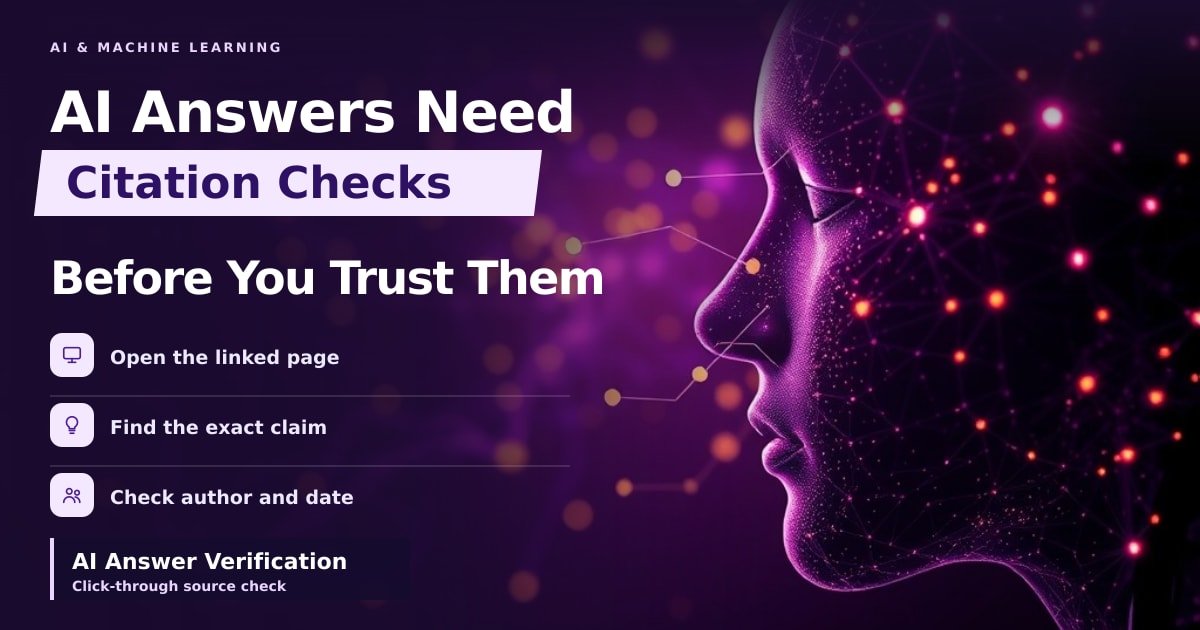
TL;DR: A link under an AI answer doesn't prove the answer is right. A grounded answer points to a real page that actually says what the AI claims — and clicking through to check takes about a minute.
In June 2023, a New York judge fined two lawyers $5,000 between them. Their court filing cited six earlier cases that did not exist. A chatbot had invented every one, complete with realistic case names and quotes.
That's the gap between an answer that looks sourced and one that's actually grounded. Learning to verify AI answers comes down to one habit: click the link.
What "grounded" means in plain English
A chatbot writes by predicting likely words, the way autocomplete finishes your sentence. It has no built-in fact-checker. So when it needs a study or a date, it produces something that looks like a study or a date.
Grounded answers work differently. Before writing, the tool searches a set of real pages, reads them, then builds the reply from what it found. Think of a student who read the chapter versus one guessing from the title. Many tools now show those pages as small numbered links below the answer.
Showing links is easy. Making sure every link supports every sentence is hard.
How to verify AI answers in 60 seconds
- Open the link, not the headline. Headlines get rewritten. The paragraph underneath is what counts.
- Search the page for the claim. Use your browser's "find in page" and type the key number or name.
- Compare the details. Swapped names, wrong years and rounded stats are the most common mismatches.
- Check the author and date. A real page from 2014 rarely supports a 2025 claim.
- Ask the bot to quote. Say: "Copy the exact sentence from that page that supports your answer." A grounded tool does it. A guessing one turns vague, or invents a quote.
If two of those steps fail, treat the answer as a draft, not a fact.
Why every chatbot suddenly shows sources
ChatGPT Search, Google's AI Overviews, Perplexity and Microsoft Copilot all put links on screen now. Partly it's a trust feature. Partly it's business: publishers want credit and traffic.
Those links are a starting point, not a guarantee. Independent checks keep finding that a share of citations don't fully back the sentence they sit beside, or point to a summary of a summary. The trend is genuinely useful — at least you have somewhere to click — but it moves the work to you.
What this means for you
Split your answers by what happens if they're wrong.
- Health, money, law, safety: never act on the AI's summary. Ask for "primary sources, not summaries" — the study itself, the regulator's page, the court order — and read that.
- Recipes, packing lists, gift ideas: one quick click is plenty.
- Work and school: save the link in your notes. "The AI said so" didn't work for those two lawyers.
My honest take: citations made chatbots feel safer without making them much more accurate. The clicking is still on you.
Key Takeaways
- "Grounded" means the answer was built from real pages the tool read first.
- A citation proves a page exists, not that it says what the AI claims.
- Click, find the exact claim, check date and author — 60 seconds.
- For health, money or legal questions, insist on the original document.
Frequently Asked Questions
Can I trust AI citations?
Only as a lead. Treat each link as a place to start reading, not as proof the sentence above it is accurate.
Why do AI tools invent sources?
The model predicts plausible text, and a realistic title, author and year is very plausible text. It isn't checking whether the page exists.
Is an AI answer with links safer than one without?
Usually, because you have something to check. But a confident answer with five links can still be wrong.
Sources
- OpenAI — Introducing ChatGPT search: https://openai.com/index/introducing-chatgpt-search/
- Stanford HAI — AI Index Report: https://hai.stanford.edu/ai-index/2024-ai-index-report
- Reuters — Lawyers sanctioned over fake ChatGPT cases: https://www.reuters.com/legal/new-york-lawyers-sanctioned-using-fake-chatgpt-cases-legal-brief-2023-06-22/
How did this story feel?
Be the first to react
AI assistance. This article was researched and drafted with AI tools and reviewed by our editorial team before publication. We link to sources at the end of every article so you can verify the claims. If you spot an error, please let us know.
Recommended gear
Related picks for this guide
ChatGPT Pro (2026)
GPT-5 · 1M token · canvas mode
Our pickView offer →GitHub Copilot Workspaces
GPT-4o · VS Code · PR review
Must‑haveView offer →Midjourney Web (turbo tier)
Turbo · 4K · 60 fps gen
Fastest renderView offer →Affiliate links: we may earn a commission at no extra cost to you.
Weekly tech brief
The tech stories worth your time, every Sunday.
One short email with the most useful guides and gadget picks from the week. No spam, unsubscribe anytime.
Written by
TechPulse TeamThe TechPulse editorial team publishes clear, practical technology guides. Every article is original and written to be understood — not just skimmed. Read our editorial policy.
Comments (0)
No comments yet — start the conversation!
Keep reading
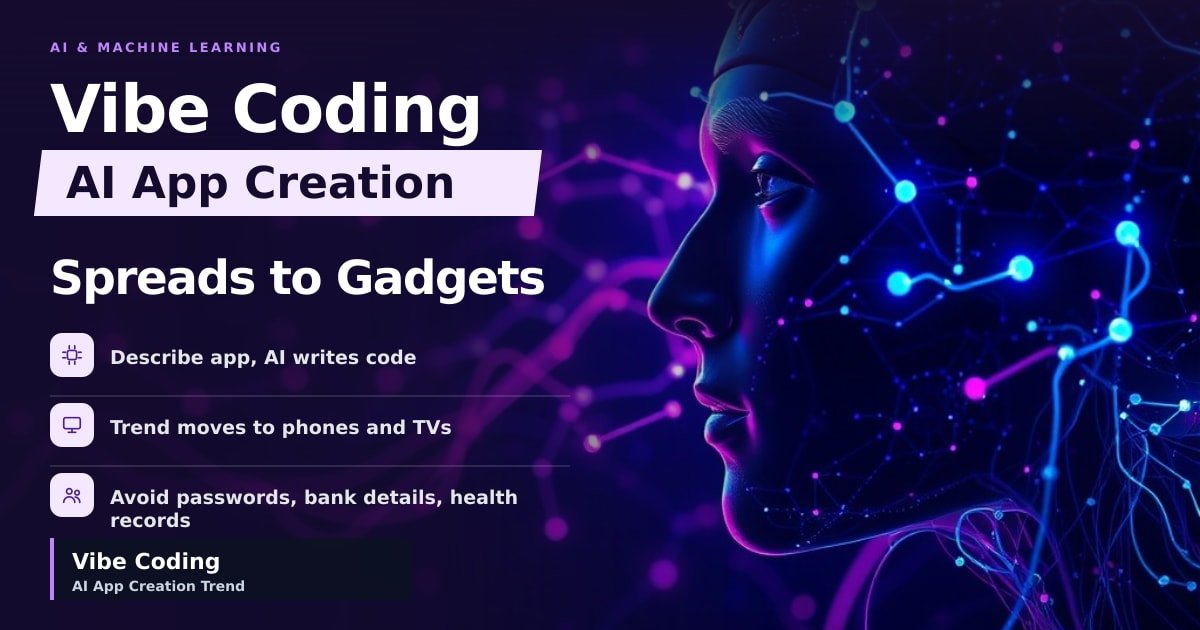
Vibe Coding Is Coming to Your Phone and TV
Vibe coding is spreading from laptops to phones, TVs and home devices. It could let you build your own tiny apps, but there's a privacy catch.
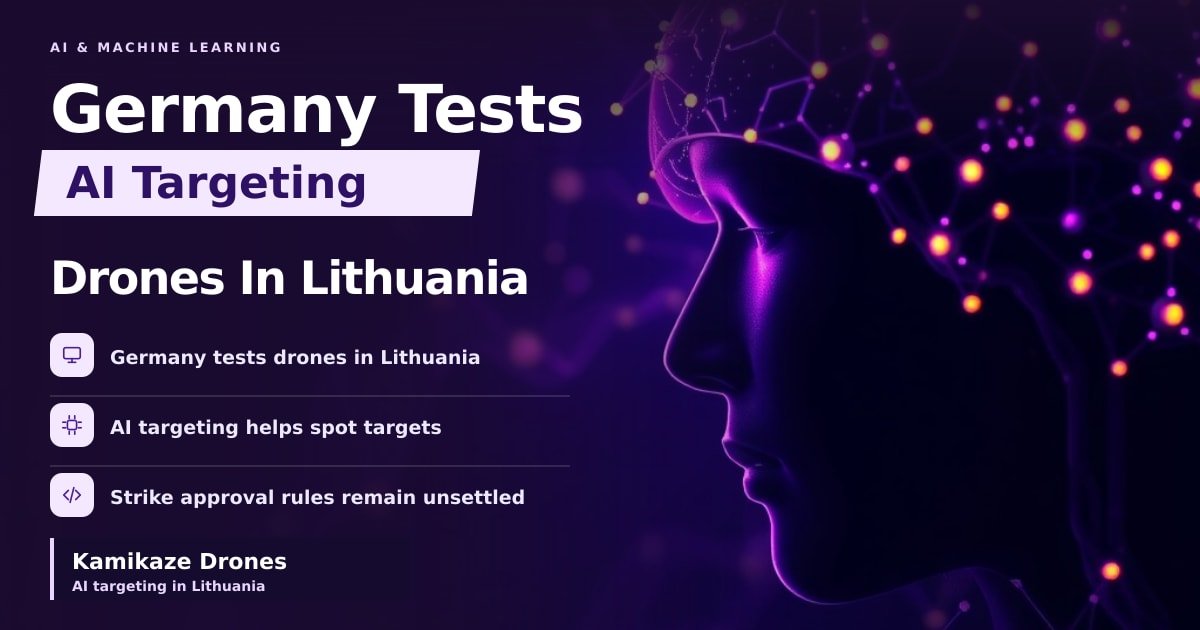
Kamikaze Drones: Germany Tests AI Targeting in Lithuania
Germany is testing kamikaze drones and AI targeting software in Lithuania, on NATO's eastern edge. Here's what it means for you.

Budget AI Phones: How the Global South's Phone King Bets Big
Transsion is betting that AI, not battery life, sells budget phones. Here's what that means for your data bill, your privacy and your next upgrade.