
Recursion Examples That Actually Click
TL;DR: Recursion is a function calling itself on a smaller piece of the same problem until it hits a base case. The best recursion examples are Russian nesting dolls, folder trees, and countdowns. Use recursion for nested or branching data; use a loop for simple, flat repetition.
You’ve already used recursion. You just didn’t call it that. Open a folder inside a folder inside a folder — that’s recursion in your file manager. The trick is knowing when that self-similar pattern helps and when it turns into a stack overflow.
Recursion examples you already know
Russian dolls are the classic: each doll contains a smaller doll, until the tiny wooden baby ends the chain. That tiny baby is the base case. Without it, you keep opening forever.
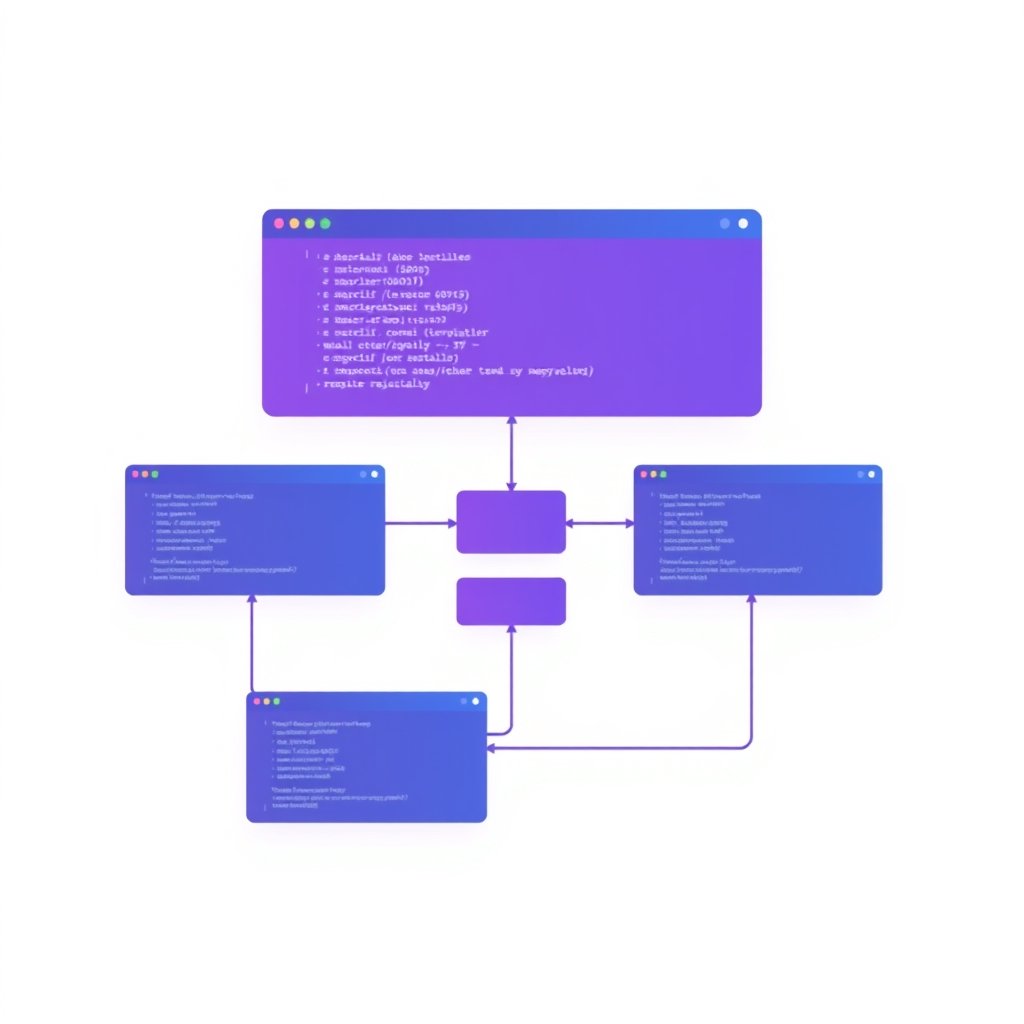
Folder trees work the same way. A recursive function example: list every file in a directory. For each folder, call the same function again. For each file, print the name. Nested comments on Reddit or Hacker News? Same shape. That’s recursion explained without a whiteboard.
Recursion vs iteration: pick the boring tool
The popular options are a loop, plain recursion, and memoized recursion. Here’s the honest comparison. Recursion wins on clarity when the data is nested. Iteration wins on memory and simplicity when you’re counting from 1 to 100.
Use a loop for flat lists, pagination, and simple math. Reach for recursion on trees, graphs with visited tracking, JSON, DOM nodes, and divide-and-conquer. If you can write the loop in three lines and it reads fine, do that. Boring code ships.
def countdown(n):
    if n == 0:
        return
    print(n)
    countdown(n - 1)
Call countdown(3) and you get 3, 2, 1. Remove the base case and Python eventually raises RecursionError — around 1,000 calls by default. That’s not a theory problem; it’s your app falling over.
The base case is the whole deal
Every recursion needs two parts: a base case that stops, and a recursive call that moves toward it. Miss either one and you get infinite calls, stack overflow, or a very confused coworker.
Base case recursion is easy to get wrong when input can be empty or negative. Test n = 0, an empty folder, and a tree with one node. Those edge cases are where recursive code earns or loses trust.
Memoization is the popular upgrade for repeated work. Naive Fibonacci recursion is a fine teaching example and a poor production choice; cache results or use a loop. For tree traversal, plain recursion is usually plenty.
When to use recursion (and when not to)
Use recursion when the problem is naturally self-similar: parse nested JSON, render a comment thread, walk a file system, implement quicksort or merge sort. Use iteration when the shape is a straight line.
Watch the stack. Deep recursion on a linked list with 100,000 nodes will fail in Python and may fail in JavaScript. If depth is unpredictable, use an explicit stack or a loop.
Opinion: learn recursion by writing the dumb factorial and Fibonacci versions once. Then move on. In day-to-day code, the best recursive function is the one that’s obviously correct — not the cleverest one.
Key Takeaways
- Recursion solves a problem by calling the same function on a smaller input.
- A base case stops the chain; without it, you get a stack overflow.
- Recursion vs iteration is a readability and memory trade-off, not a religion.
- Reach for recursion on trees, nested data, and divide-and-conquer; use loops for flat repetition.
Frequently Asked Questions
What is recursion in simple terms?
Recursion is when a function calls itself to solve a smaller version of the same problem, like opening a nesting doll to find another doll inside.
What happens if a recursive function has no base case?
It keeps calling itself until the call stack runs out, usually causing a stack overflow or
RecursionError. The base case is the exit door.Is recursion faster than a loop?
Usually no. Loops avoid function-call overhead and stack growth. Recursion can be clearer for nested data, but speed is rarely the reason to pick it.
How did this story feel?
Be the first to react
Recommended gear
Popular tech picks

Samsung Galaxy S25 Ultra
6.9" AMOLED · 200MP · 5000mAh
Editor's pickView on Amazon →
Apple MacBook Air 13-inch (M4)
M4 · 16GB · 13.6" Liquid Retina
Editor's pickView on Amazon →
Sony WH-1000XM5
Over-ear ANC · 30h battery
Best headphonesView on Amazon →Affiliate links: we may earn a commission at no extra cost to you.
Written by
TechPulse Team
The TechPulse editorial team publishes clear, practical technology guides. Every article is original and written to be understood — not just skimmed.
Comments (0)
No comments yet — start the conversation!
Keep reading
How Package Managers Solve Dependency Hell
A package manager is your project's version referee. Here's how it untangles dependency hell, one lockfile at a time.

OOP vs Functional Programming: When Each Wins
Two developers, one ticket: one builds a class, the other writes three functions. How to choose between OOP and functional thinking — without the dogma.

Technical Debt: What It Is and How It Grows
Technical debt is future work you owe for a faster choice today. Here's how it builds up, when it's smart, and how to pay it down.