
Samsung Reactive OOH Ads Bring the Phone War to the Street
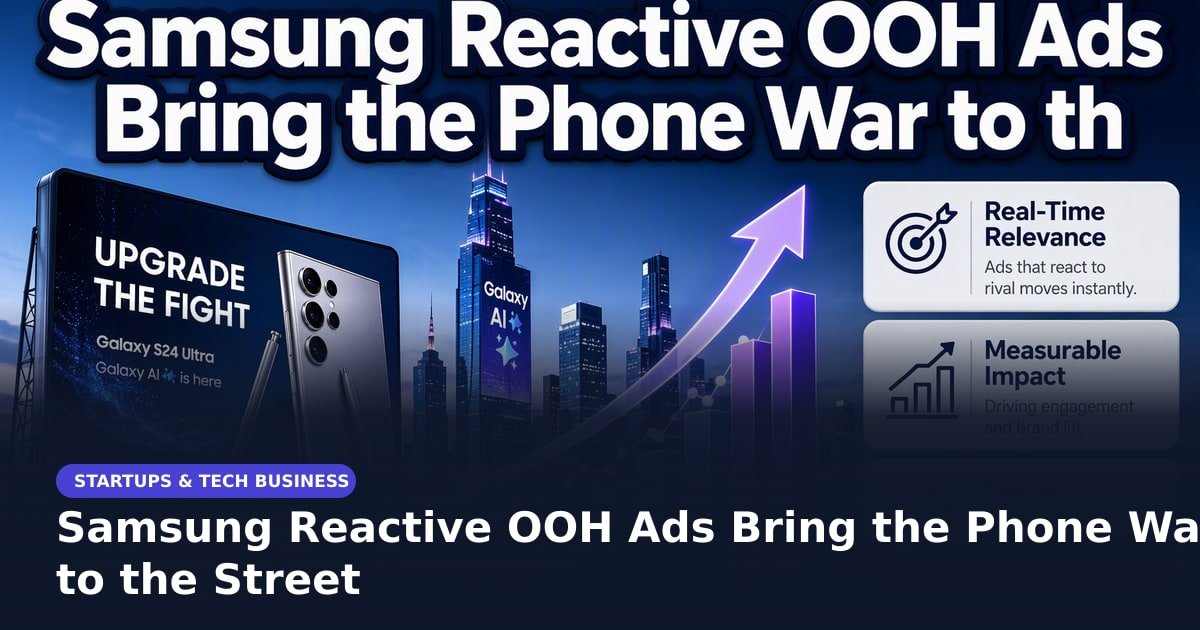
TL;DR: Samsung is pushing its smartphone pitch onto street-level digital screens that change their message in real time, rather than running one fixed poster for a month. It's a marketing story, not a hardware one — the phones haven't changed, but the way they're being sold to you has. Expect more, and more localised, phone advertising in public spaces.
Samsung didn't reinvent the smartphone this week. It reinvented where the argument happens. Instead of saving the pitch for a keynote or a YouTube pre-roll, the company is reported to be taking its case to digital billboards that respond to what's going on around them — the hour, the weather, a trending topic, a rival's launch.
What's actually happening
Reactive out-of-home (OOH) advertising means screens that swap creative on the fly instead of sitting on one artwork for a month. A morning board can push battery life to commuters; the same screen in the evening can push night-mode photography to people heading out. Triggers are usually automated feeds — weather, scores, social trends — and the creative is pre-built so it can be assembled in seconds.
Be clear about the limits of what's known: no city list, no budget, no confirmed campaign name or screen count. The format is confirmed; the scale isn't. That gap matters, because "Samsung goes reactive" could mean a handful of flagship sites in a few metros or a genuinely national rollout, and those are very different stories.
Why it matters to you
Two practical consequences. First, you'll notice phone ads that feel oddly timely — that's not coincidence, it's a weather API. Second, expect volume. Reactive creative is cheaper to adapt than shooting new films, so brands can afford many more variants. More variants means more places you'll run into the brand, including near where you actually live rather than only in premium city centres.
Privacy deserves a straight answer. Most reactive campaigns run on aggregate data — temperature, trending hashtags, sports results — not on recognising your face. But camera-equipped screens exist, and regulators have been circling. If a screen ever seems to react to you rather than the weather, that's the line worth asking about.
The bigger picture
Flagship phones have converged to the point where spec sheets bore people. A 200MP sensor or a titanium frame no longer wins an argument on its own, so the fight moves to story, timing and place. Samsung has long bought outdoor space near rival stores and around launch windows; reacting in real time is an extension of that instinct, not a new religion.
Context matters here. Samsung leads India's smartphone market but faces relentless pressure from Chinese brands on price and from Apple at the top end. In that fight, a billboard outside a metro station in a tier-2 city can do more work than a glossy global film. Street-level visibility is cheap reach for a mass-market pitch.
There's also a defensive angle. When a competitor launches, you can respond within hours instead of booking a new media buy. That's the real product being sold to marketers.
What to watch next
Watch for copycats — if this lands, expect every big Android launch to arrive with a reactive component. Watch the measurement claims too; "engagement" numbers from OOH are notoriously fuzzy, and brands love a vague uplift stat.
And keep your eye on the phones themselves. Clever billboards don't make a better camera. Impressive craft, yes. A signal about the hardware? No.
Key Takeaways
- Samsung is reportedly using reactive digital OOH to update its smartphone messaging in real time.
- The triggers are typically aggregate data feeds, not facial recognition — but camera-equipped screens remain a grey area.
- Expect more ad variants and more localised targeting, because reactive creative is cheaper to adapt than fresh films.
- Campaign scale, cities and budget are unconfirmed — treat grand claims about reach with caution.
Frequently Asked Questions
What is reactive OOH advertising?
Is Samsung's reactive advertising watching me?
Will this change what I pay for a Samsung phone?
How did this story feel?
Be the first to react
Recommended gear
Popular tech picks
Samsung Galaxy S25 Ultra
6.9" AMOLED · 200MP · 5000mAh
Editor's pickView on Amazon →
Apple MacBook Air 13-inch (M4)
M4 · 16GB · 13.6" Liquid Retina
Editor's pickView on Amazon →
Sony WH-1000XM5
Over-ear ANC · 30h battery
Best headphonesView on Amazon →Affiliate links: we may earn a commission at no extra cost to you.
Written by
TechPulse Team
The TechPulse editorial team publishes clear, practical technology guides. Every article is original and written to be understood — not just skimmed.
Comments (0)
No comments yet — start the conversation!
Keep reading

Why Documentation Is a Growth Strategy
Good docs answer buyer questions at 11pm, feed AI assistants and cut support tickets. Here's why documentation is a growth strategy, and what to write first.

Growth Hacking Ethics: Plain Answers to Hard Questions
Fake scarcity, hidden fees, contact-list spam — here's where growth hacking turns unethical, and how to spot it before you pay.
Samsung's Reactive OOH Ads Take the Phone Fight to the Street
Samsung is pushing its phone rivalry onto reactive digital street screens that update fast. Smart marketing, but it says nothing about whether the hardware is any good.