
Samsung's Reactive OOH Ads Take the Phone Fight to the Street
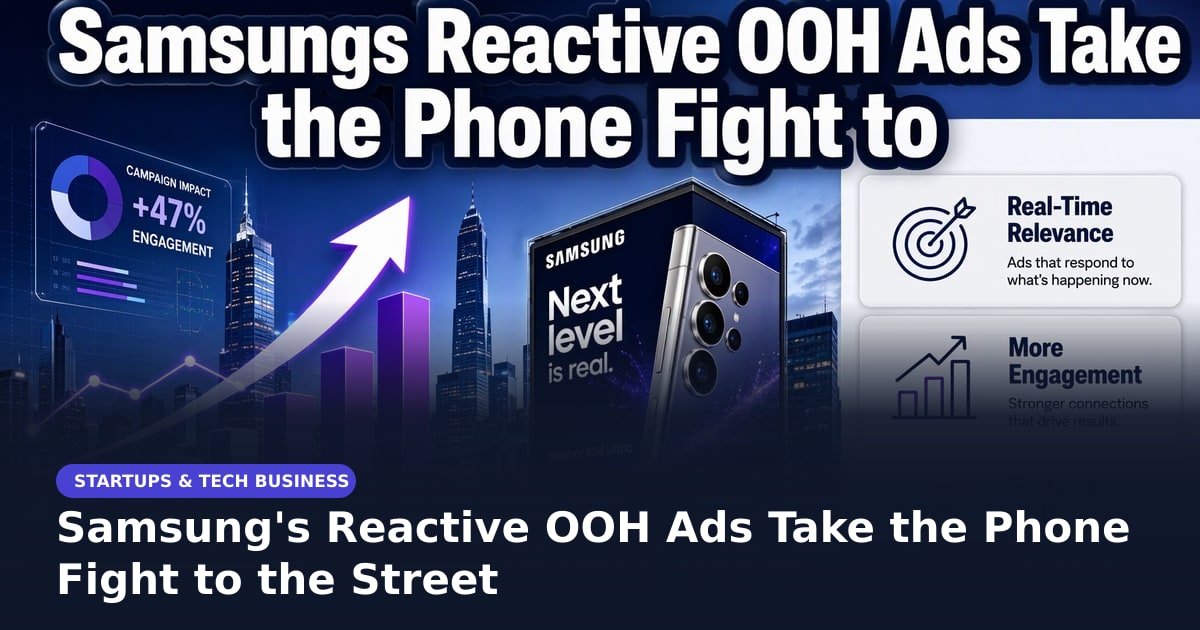
TL;DR: Samsung is using reactive OOH — street-level digital screens built to change their message on short notice — to keep the smartphone argument in front of people who never watch a keynote. It's a smart, unsubtle shift in ad spend, and it won't tell you a single thing about whether the phone is actually good.
Billboards used to shout. Now they bicker. Samsung's latest push drags the phone-versus-phone argument out of the launch hall and onto the pavement, on screens designed to update in hours rather than sitting frozen for a quarter.
What Samsung's reactive OOH is really doing
Reactive out-of-home means the creative isn't locked when it ships. Digital panels can swap copy in response to a trigger — the weather, the time of day, a local event, a rival's announcement, social chatter. Instead of one poster in 200 spots, you get a network that behaves a bit like a feed.
Samsung is not new to poking Apple in public. Its long-running "Ingenious" spots and the years of Note-versus-iPhone sniping set the house style: find the rival's sore spot — charger in the box, port changes, incremental upgrades — and make a joke of it. What's different here is speed and placement. A screen outside a flagship store can land harder than a pre-roll people skip in three seconds.
Exact markets, creative and spend haven't been laid out in detail, so treat specifics with care. The direction, though, is unmistakable.
Why it matters to you
You're the person standing on that platform. Advertising behaves differently when the message can change within hours of a competitor's launch — it gets more topical, more reactive, and much harder to tune out with a thumb.
There's a money angle too. Hype shapes launch pricing and how long a phone holds its resale value. When a brand buys heavy street-level visibility right as a rival ships a device, that's a tell about which models it feels it has to defend.
Then there's the data question. Triggers usually come from something — weather feeds, footfall counters, nearby mobile activity. Location-linked targeting on public screens deserves fair scrutiny about how anonymous that data really is, even when no faces are stored. Full campaign details aren't public, so keep the scepticism switched on.
The bigger picture
Out-of-home has been quietly going digital for years, and programmatic buying made it editable. Pair sharper panels with cheap connectivity and you get something close to a billboard with a newsroom bolted on.
Samsung has reasons to push here. Its flagship roadshow is crowded, mid-range rivals undercut it on price, and foldables remain a niche purchase. Standing out now takes more than a spec sheet — it takes visible, local, talkable moments.
Here's my honest read: the strategy is smart, the cleverness is oversold. A witty screen won't fix a camera that disappoints in low light or software support that dries up early. Ads win the argument on the street; the phone wins it in your hand.
What to watch next
- Whether the screens react to specific launch moments or just seasonal and weather slots.
- If the playbook trickles down to mid-range models, where buyers are more price-sensitive than brand-loyal.
- Google and Apple's reply — both have the budget, and one owns a chunk of the ad stack.
- Any pushback from cities or regulators over cameras and sensors inside public ad panels.
Key Takeaways
- Samsung is taking phone rivalry to digital street screens that update fast.
- Reactive OOH rewards brands with agencies and legal teams on standby.
- Ad cleverness rarely covers for weak hardware or short software support.
- Expect more sensor-driven, location-aware billboards — and more debate about them.
Frequently Asked Questions
What does reactive OOH mean?
Is Samsung launching a new phone with this?
Do these billboards collect your data?
How did this story feel?
Be the first to react
Recommended gear
Popular tech picks
Samsung Galaxy S25 Ultra
6.9" AMOLED · 200MP · 5000mAh
Editor's pickView on Amazon →
Apple MacBook Air 13-inch (M4)
M4 · 16GB · 13.6" Liquid Retina
Editor's pickView on Amazon →
Sony WH-1000XM5
Over-ear ANC · 30h battery
Best headphonesView on Amazon →Affiliate links: we may earn a commission at no extra cost to you.
Written by
TechPulse Team
The TechPulse editorial team publishes clear, practical technology guides. Every article is original and written to be understood — not just skimmed.
Comments (0)
No comments yet — start the conversation!
Keep reading

Why Documentation Is a Growth Strategy
Good docs answer buyer questions at 11pm, feed AI assistants and cut support tickets. Here's why documentation is a growth strategy, and what to write first.

Growth Hacking Ethics: Plain Answers to Hard Questions
Fake scarcity, hidden fees, contact-list spam — here's where growth hacking turns unethical, and how to spot it before you pay.
Samsung Reactive OOH Ads Bring the Phone War to the Street
Samsung is moving the smartphone war onto street-level screens that react in real time. What the campaign actually changes — and what it doesn't.