
Africa Smartphone Slump: Shipments Down 39% in Q3

A 39% drop in three months isn't a market correction. It's a market screaming. The latest data out of Africa shows smartphone shipments collapsing in the third quarter — the Africa smartphone slump is real, and it's steep. If you live anywhere on the continent, or just watch the global tech supply chain, you should care far more than the headline suggests.
Let's be clear about what this isn't. This isn't Apple missing a quarter. This isn't Samsung's premium line wobbling. This is the volume end of the market: the phones most ordinary people actually buy, the ones that get passed from sibling to sibling, the first internet device for an entire generation. When that engine stalls, everything downstream stalls with it.
What the Africa smartphone slump actually means
The short version: far fewer phones moved across borders and into shops in Q3 than anyone expected. A 39% year-on-year slump means nearly four out of every ten units that shipped a year ago simply didn't ship this time around. Retailers who were counting on the usual post-summer bump got something very different.
The pattern matters as much as the number. This isn't one country sneezing. It's broad-based. Currency weakness in several major African markets has made imported components — and finished phones — dramatically more expensive in local-currency terms. That's not a preference shift. That's a price shock hitting households already juggling food costs and transport fares.
Why it matters to your wallet and your day
Here's the part the business pages skip. When the cheap-and-cheerful end of a market seizes up, the knock-on effects are weirdly personal.
First, your next phone gets older before you even buy it. A shrinking market means fewer new models, less competition at the budget tier, and slower pressure on prices. The bargain you were waiting for? It may not come, or it may arrive stripped of features the previous generation had.
Second, the secondary market thins out. In many parts of Africa, the realistic path to owning a working smartphone isn't a flagship store — it's a cousin upgrading and handing down their two-year-old device. When new shipments fall, the hand-me-over pipeline dries up too. Fewer refurbs, fewer repaired units, fewer options.
Third — and this is the quiet one — it slows the jump from feature phones to smartphones. That transition isn't just about gadgets. It's about mobile money, which in many countries is the difference between banking and not banking, between a market stall that takes payments and one that doesn't. Every quarter the entry-level smartphone gets harder to afford is a quarter that digital life gets delayed.
The bigger picture: how we got here
It's easy to paint this as a sudden collapse. It isn't. The African smartphone story of the last decade has been one of the few genuine success arcs in global tech: billions of people moving from nothing to their first connected device, mostly on Android, mostly from makers who understood the price point better than anyone.
That wave crested, and a few things caught up at once. Currency pressures. Import rules tightening in several countries, pushing up costs. And the uncomfortable truth that after years of explosive growth, the market was starting to mature — people were keeping phones longer because the incremental upgrade stopped feeling worth it.
There's also a supply-chain angle worth naming. The brands that dominate Africa have been running thin margins for years. When volumes dip, those margins don't absorb it. They transmit it straight to the retail shelf.
What to watch next
A slump this sharp doesn't last forever, but the recovery won't look like the boom that came before.
Expect brands to get serious about financing — installment plans, bundled data, the kind of softening that makes a typical entry-level phone feel like a small monthly commitment. That's already happening in pockets, and it's the most realistic path back to volume.
Watch the local-assembly story. Several African governments have been pushing for it, and it's not just politics. Building closer to the customer cuts currency exposure and import costs. If it scales, it changes the economics entirely.
And keep an eye on what happens at the very bottom. The feature-phone-to-smartphone bridge isn't dead; it's just getting more expensive to cross. The brands that solve that — not with cheaper plastic, but with genuinely better value at the entry point — will own the next decade.
One honest caveat: the specific drivers behind this 39% figure aren't fully unpacked in the reporting so far, and I won't pretend to a precision the data doesn't support. What's clear is the direction, and the direction is rough.
Key Takeaways
- African smartphone shipments fell 39% in Q3 — a sharp, broad-based contraction, not a single-market blip.
- Currency weakness and rising import costs are pushing entry-level phones out of reach for millions of households.
- The slump slows the feature-phone-to-smartphone transition, with real effects on mobile money and digital access.
- Budget-tier competition is shrinking, which means fewer bargains and slower innovation at the low end.
- Recovery will likely lean on financing, local assembly, and genuine value at the entry level rather than a repeat of the old volume boom.
- Brands with thin margins are most exposed; the next wave of growth belongs to whoever makes the cheapest phone feel worth buying.
Frequently Asked Questions
What caused the 39% drop in African smartphone shipments? The reported figures point to a sharp contraction in Q3 volume, driven largely by currency weakness in major African markets and the rising cost of imported phones and components. Those factors push entry-level devices out of reach at exactly the moment when demand should be growing. Exact causal splits aren't fully detailed in the available data, but the direction of travel is unambiguous.
Does this affect me if I don't live in Africa? Indirectly, yes. The brands that dominate Africa are major players in other emerging markets, and a slump there reshapes their global strategy, pricing, and product roadmaps. Supply-chain investors and component makers feel it too. If you care about affordable Android phones anywhere, this matters.
Will smartphone prices in Africa go up or down from here? Prices are already under pressure from currency and import costs, which tends to push them up in local terms. Over the longer term, expect more financing options and local-assembly efforts to soften the blow. A return to the old bargain-bin price war isn't guaranteed — the market that comes back may be pricier and more structured.
How did this story feel?
Be the first to react
Written by
TechPulse Team
The TechPulse editorial team publishes clear, practical technology guides. Every article is original and written to be understood — not just skimmed.
Comments (0)
No comments yet — start the conversation!
Keep reading
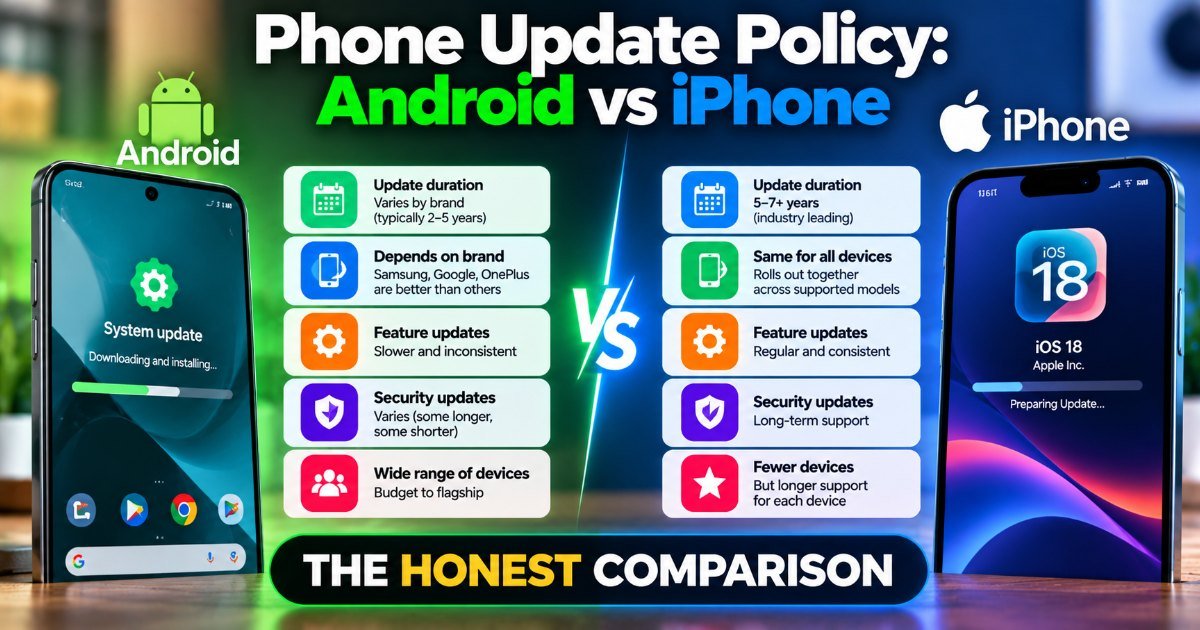
Phone Update Policy: Android vs iPhone — The Honest Comparison
How long does your phone actually get updates? Android vs iPhone compared honestly — update lengths, real-world testing, and what to expect before you buy.

How Phone Camera Processing Works: Inside a Real Camera App
You're at a concert. The stage lights are a mess — deep blues, harsh reds, and the singer's face lost in shadow. You raise your phone, and the screen shows…

Phones Without Chargers: What You Actually Lose (and Gain)
You unbox a new phone, peel the plastic, and reach for the charger. It's not there. Again. This is the reality of phones without chargers in 2026 — it's been…