
Design Systems: Why Big Teams Build Their Own

TL;DR: A design system is a shared kit of buttons, forms, colors, rules and code. Big teams build their own when off-the-shelf kits can't match their brand, accessibility needs or workflows. Done well, it saves time and stops every page from looking like a different website.
Imagine 40 developers and 12 designers shipping a banking app. One button is blue, another green, and a third has odd corners. A design system gives everyone the same parts and rules before the first screen is built.
What a design system actually is
A design system is more than a color palette. It's a shared set of design rules, reusable interface parts and code that teams use to build pages. Think of a restaurant chain's kitchen manual: same recipes, same plating, but local cooks still make the meal.
The reusable parts are often called a component library. That's a box of ready-made buttons, menus, form fields and alerts. A good system also explains when to use each part and how it should behave on phones and laptops.
Good systems cover accessibility too. That means making sure people who use screen readers (software that reads pages aloud) or a keyboard can still use your site. It's easier to fix that once in a shared button than on 200 separate pages.
Why big teams build design systems
At small scale, a shared file and a few rules can work. At large scale, they break. Different teams ship different buttons, spacing and error messages. Users notice, even if they can't say why.
Big teams build their own systems for a few practical reasons:
- Speed: designers and developers reuse tested parts instead of rebuilding them.
- UI consistency: every product feels like it came from the same company.
- Accessibility: fixes land once and reach every team.
- Brand: strict colors, type and tone are baked into the parts.
- Control: no waiting for an outside vendor to add a feature you need.
Off-the-shelf kits like Bootstrap or Material UI are fine at first. They start to pinch when your product has unusual rules or your brand is strict. That's when a custom system earns its keep.
Real design system examples
Shopify built Polaris for its admin screens. It gives merchants a familiar set of patterns when they manage orders, products and payments. IBM built Carbon for its cloud products and shared it publicly. GitHub's Primer keeps its many pages and tools feeling related. Atlassian's design system helps Jira and Confluence feel like cousins instead of strangers.
These aren't side projects. They're living products with teams, docs and version numbers. That's also the warning: a design system needs care. If nobody owns it, it becomes a dusty folder nobody trusts.
What this means for your team
If you run a small site or a young startup, don't build a design system from scratch. Start with an existing kit, restyle it to your brand, and write down a few rules. Build your own only when reuse and consistency save more time than the upkeep costs.
For a big team, treat the system as a product. Give it an owner, a budget and a way to accept fixes. Otherwise you'll get a shelf full of pretty parts that nobody uses.
Key Takeaways
- A design system is shared rules, reusable parts and code, not just a color guide.
- Big teams build one to move faster, stay consistent and fix accessibility once.
- Shopify, IBM, GitHub and Atlassian show the payoff at scale.
- Small teams should start with an existing kit and customize it.
Frequently Asked Questions
What is a design system in simple terms?
It's a shared kit of design rules and ready-made parts, like buttons and form fields, that teams use to build a website or app. It keeps pages consistent and saves rebuilding the same pieces.
Do small teams need a design system?
Usually not a custom one. Start with an existing kit and a short style guide. Build your own only when your product has special rules or your team is large enough to feel the pain.
What are examples of design systems?
Shopify Polaris, IBM Carbon, GitHub Primer and Atlassian Design System are well-known examples. Each gives a big company a shared set of parts and rules for many products.
How did this story feel?
Be the first to react
Recommended gear
Popular tech picks

Samsung Galaxy S25 Ultra
6.9" AMOLED · 200MP · 5000mAh
Editor's pickView on Amazon →
Apple MacBook Air 13-inch (M4)
M4 · 16GB · 13.6" Liquid Retina
Editor's pickView on Amazon →
Sony WH-1000XM5
Over-ear ANC · 30h battery
Best headphonesView on Amazon →Affiliate links: we may earn a commission at no extra cost to you.
Written by
TechPulse Team
The TechPulse editorial team publishes clear, practical technology guides. Every article is original and written to be understood — not just skimmed.
Comments (0)
No comments yet — start the conversation!
Keep reading

What Is a CDN? How Your Site Loads Worldwide
A CDN keeps copies of your site in cities near your visitors. Here's how that cuts load times, when caching backfires, and what to set up first.

REST vs GraphQL: a real project shows the difference
One food-delivery screen needs four calls with REST and one with GraphQL. Here's what actually matters when you build it.
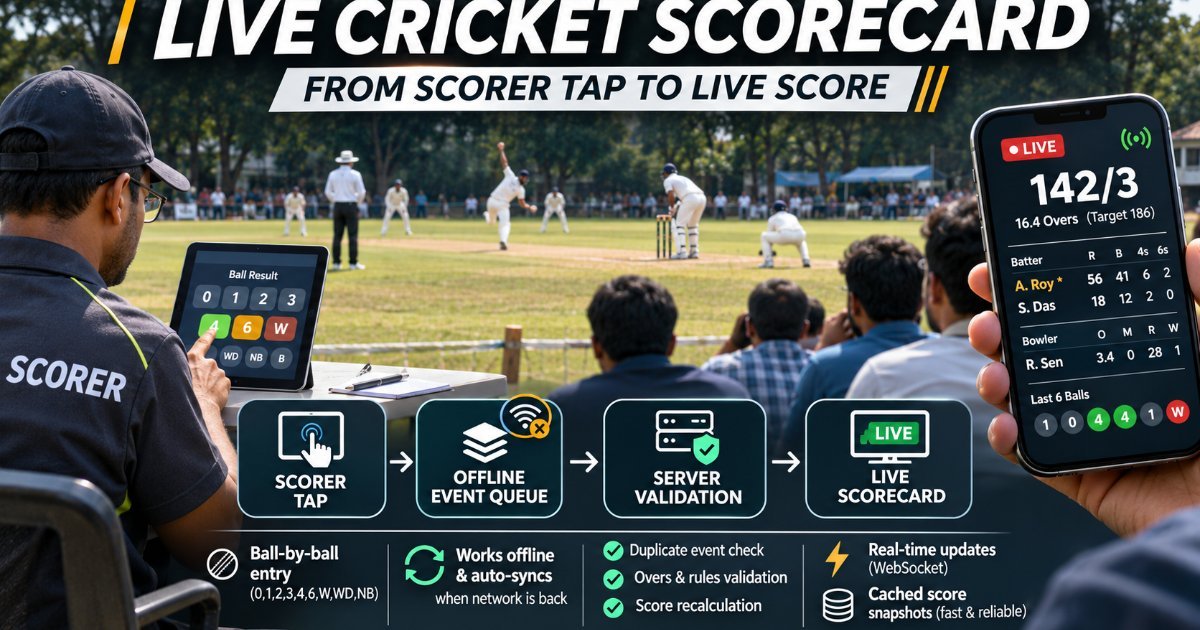
What Happens Between a Scorer's Tap and Your Live Cricket Score?
A live scorecard is a data pipeline disguised as a scoreboard. Here is what has to go right between the scorer's tap and your phone.