
Healthy Kitchen Gadgets: Buy Less, Eat Better

TL;DR: The trending five-gadget list is less about must-have products and more about removing small daily hurdles. You probably don’t need all five healthy kitchen gadgets; pick the one that fixes your real bottleneck and skip the rest.
It’s 7 p.m. You’re hungry, tired, and the crisper drawer has a sad bag of spinach. A gadget can help here, but only if it’s the right one.
What’s Actually Happening
A trending guide lists five kitchen gadgets and appliances that helped one writer eat healthy every day. The exact picks matter less than the pattern: tools that cut prep time, make vegetables easier to cook, or turn “I’ll eat later” into “dinner is ready.”
That’s a useful shift. The story isn’t a product launch. It’s a reminder that healthy eating often fails at the boring step: washing, chopping, planning, and cleaning up. A gadget earns its counter space when it makes one of those steps easier than doing nothing.
Common examples include air fryers, blenders, food scales, steamers, and meal-prep containers. None of them is magic. Each one just removes a small excuse.
Why Healthy Kitchen Gadgets Only Work If They Fit Your Life
The best healthy kitchen gadgets are the ones you’ll actually use on a Tuesday night. A blender is useful if you already like smoothies; it’s clutter if you don’t. An air fryer can make vegetables fast, but it still needs chopping and cleaning. A food scale helps portions, but only if tracking calories is your goal.
Before buying, name your bottleneck: no time, no ideas, no portion control, or too much cleanup. Then buy for that single problem. One cheap tool you use daily beats five fancy appliances you wipe once and ignore. Counter space and mental load are real costs.
The Bigger Picture: Tools Don’t Cook for You
Kitchen gadgets can lower friction, but they can’t supply a plan. You still need a few default meals, a shopping list, and a shelf in the fridge where healthy food is visible. A gadget that hides vegetables in a smoothie won’t fix a fridge full of expired food.
The smarter move is to build a short rotation: one quick breakfast, two lunches, three dinners. Then ask which tool makes that rotation faster. If the answer is “none,” save your money.
What to Check Before You Add Another Appliance
Look for easy cleaning, a small footprint, and a clear job. If a gadget needs special pods, expensive filters, or a 30-minute cleanup, it will lose to takeout on a busy night. Also check noise and storage. A blender that sounds like a jet engine may wake the house at 6 a.m.
And read the return policy. The first two weeks tell you whether a tool becomes a habit. If it’s still on the counter after a month, it’s earning its place. If it’s in a cupboard, you have your answer.
Key Takeaways
- The five-gadget list is a prompt, not a shopping list.
- Buy for one real bottleneck: time, cleanup, portion size, or meal ideas.
- Counter space and cleaning time count as part of the price.
- A gadget helps only if it fits meals you already like.
Frequently Asked Questions
Do I need special kitchen gadgets to eat healthy?
No. Basic tools like a knife, pan, and containers can do most of the work. Gadgets help when they remove a specific daily hurdle.
Which healthy kitchen gadget is worth buying first?
Pick the one you’ll use several times a week. For many people that’s a blender, air fryer, or simple food scale, but it depends on your routine.
How do I stop buying gadgets I never use?
Name the problem first, then buy for that problem. Check cleaning time and storage before price.
How did this story feel?
Be the first to react
Recommended gear
Related picks for this guide

Dreame L10s Ultra
5300Pa · self-empty · mop wash
Best robot vacuumView on Amazon →
Levoit Core 300S
HEPA H13 · 219 ft² · 24dB
Quiet pickView on Amazon →
Philips Airfryer XXL
7.3L · Rapid Air · 2225W
Best for familiesView on Amazon →Affiliate links: we may earn a commission at no extra cost to you.
Written by
TechPulse Team
The TechPulse editorial team publishes clear, practical technology guides. Every article is original and written to be understood — not just skimmed.
Comments (0)
No comments yet — start the conversation!
Keep reading

Standby Power Audit: Find What's Wasting Money
That red light on your TV is costing you money. Here's how to measure standby power at home in an hour, and which devices are actually worth unplugging.

Cheap Appliances: The Bills That Show Up Later
That ₹16,000 washing machine might cost you more than the ₹27,000 one. Here's where cheap appliances quietly bill you later.
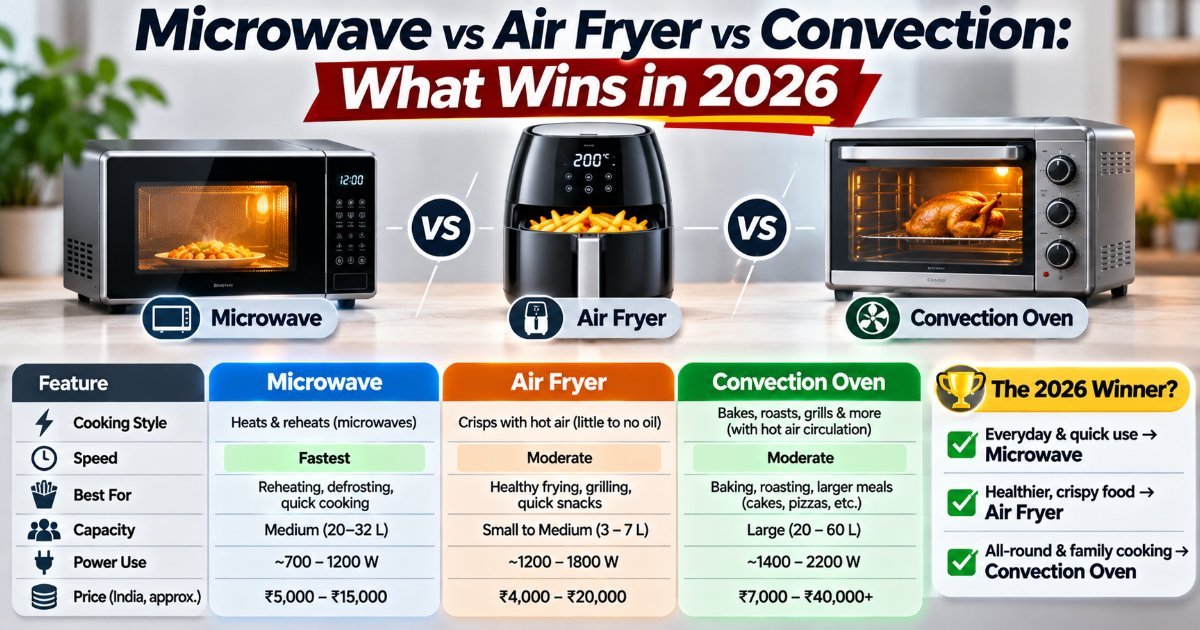
Microwave vs Air Fryer vs Convection: What Wins in 2026
Three appliances, one countertop, and a lot of overlap. Here's what each one genuinely does best in 2026 — and the combo you should probably skip.