
Induction Cooking Explained (No Fancy Kitchen Needed)

Boil a cup of water in about two minutes, then touch the cooktop beside the pan. It’s warm, not blistering. That party trick tells you more about induction cooking than a spec sheet does — and it explains why this technology is showing up in ordinary kitchens, rentals, and small apartments, not just showroom setups.
How induction cooking actually works
Under that smooth glass is a coil that creates a magnetic field. Put a magnetic pan on top, and the field makes the pan itself heat up. The cooktop doesn’t glow red. The pan does the cooking.
That’s why induction responds so fast. Turn it down, and the pan cools quickly. Turn it up, and water boils in a hurry. You get gas-like control without a flame, and cleaning is mostly a wipe-down once the glass cools.
The catch is simple: the pan has to be magnetic. More on that in a second.
Do you need special pans for induction cooking?
Not “special” pans — magnetic ones. Grab a fridge magnet. If it sticks firmly to the base of your pan, that pan will probably work.
Here’s the short list:
- Works well: cast iron, most stainless steel, enameled steel.
- Usually doesn’t work: pure aluminum, copper, and glass.
- Sometimes works: aluminum or copper pans with a magnetic base plate built in.
Cookware compatibility isn’t guesswork, but it can be fussy. A pan with a small magnetic disc and a warped bottom may buzz, heat unevenly, or refuse to register. Flat bases matter more on induction than on gas. If your favorite skillet has a rounded bottom, it may wobble and heat in a ring.
My advice: test your daily pans before you buy a full induction range. If half your cookware is non-magnetic, factor replacements into the budget. Cast iron is cheap and works great. A decent magnetic stainless skillet won’t break the bank either.
Induction vs gas cooking: which feels right?
Gas gives you visual feedback. You see the flame, you can char a pepper directly, and a round-bottom wok sits naturally in the grate. If you love high-heat wok cooking, gas still has a real advantage in a normal kitchen — unless you spring for a dedicated induction wok burner, which is rare and pricey.
Induction wins on daily speed and cleanup. Water boils faster. Low simmers are steady. The surface stays cooler around the pan, so spilled sauce doesn’t bake into a crust. And there’s no gas line, no pilot light, no flame to fuss with.
For most regular cooks, induction is the better weekday tool. For someone who cooks stir-fries three nights a week and loves flame, gas is still worth considering. There’s no universal winner here — it depends on how you actually cook.
Is induction cooking worth it for a regular kitchen?
Here’s my take: if you’re already remodeling or replacing a dying stove, induction is a smart upgrade. If your current stove works fine and you’re just curious, buy a portable unit first. A popular one like the Duxtop 9600LS often sells for under $100. It won’t match a full range, but it’ll tell you whether you like the feel.
Full-size induction ranges usually run into four figures. GE Profile, Bosch 800 Series, and Frigidaire Gallery all make induction models, and prices climb with size, power, and finish. That’s a real purchase. Don’t make it without checking your electrical setup.
If you’re swapping a gas range for a full induction range, budget for an electrician. A full-size range usually needs a 240V circuit. Older kitchens may not have one in the right spot. Portable units plug into standard 120V outlets, but they can pull around 1,800W — don’t share that circuit with a kettle and an air fryer and act surprised when the breaker trips.
What about noise, power, and installation?
Induction hobs aren’t silent. Most have a cooling fan, and cheaper units can sound like a laptop under load. Pan buzz is normal too, especially with thin-based pans. A good pan and a decent hob reduce it, but don’t expect a library.
Power matters more than people think. A portable induction cooktop is a cheap way to test the idea, but it won’t replicate a strong built-in hob. Full-size induction ranges spread heat across multiple zones and handle bigger pots better.
Ventilation still matters. You’re not burning gas, so there’s less greasy heat in the air, but you’re still cooking. Smoke and steam need somewhere to go. A hood is still your friend.
Cleaning, safety, and the small annoyances
Cleaning is the quiet win. The glass surface is flat, so crumbs don’t hide in grates. Wait for it to cool, wipe with a damp cloth, and use a ceramic-glass cleaner for stubborn marks. Don’t slide cast iron across the glass — lift it. Cast iron can scratch.
Safety is good, not magic. The surface stays cooler than a gas grate, but the pan is still hot. Don’t leave metal utensils on the hob, and don’t assume the glass is safe to touch just because it isn’t glowing.
One annoyance: controls. Some induction hobs use touch sliders that are fussy with wet fingers. Others have coarse power steps. If you can, try the controls in a store before buying. A pretty hob with annoying controls gets old fast.
Key Takeaways
- Induction cooking heats the pan, not the cooktop, using a magnetic field.
- Your pan needs a magnetic base — do the fridge-magnet test before buying.
- Induction is faster and easier to clean than gas, but gas still wins for round-bottom wok cooking.
- A full induction range may need a 240V circuit; portable units are a cheap way to test the idea.
- Noise and pan buzz are normal, especially on budget models.
- If you’re remodeling anyway, induction is worth serious consideration. If not, try a portable first.
Frequently Asked Questions
is induction cooking worth it in 2026?
For most regular kitchens, yes — especially if you’re replacing an old stove or remodeling. It’s fast, precise, and easier to clean than gas. The main caveats are cookware compatibility and the cost of electrical work for a full-size range. Try a portable unit if you’re unsure.
what pans don't work on induction?
Pure aluminum, copper, glass, and most ceramic pans won’t work unless they have a magnetic base plate. Test with a fridge magnet. If it doesn’t stick firmly, the pan probably won’t heat on induction.
does induction cooking use a lot of electricity?
It can draw a lot of power while a zone is on, but it’s efficient because most of the heat goes into the pan. A portable unit can pull around 1,800W, so avoid sharing that circuit with other high-draw appliances. Running costs depend on your local electricity price and how you cook.
How did this story feel?
Be the first to react
Written by
TechPulse Team
The TechPulse editorial team publishes clear, practical technology guides. Every article is original and written to be understood — not just skimmed.
Comments (0)
No comments yet — start the conversation!
Keep reading
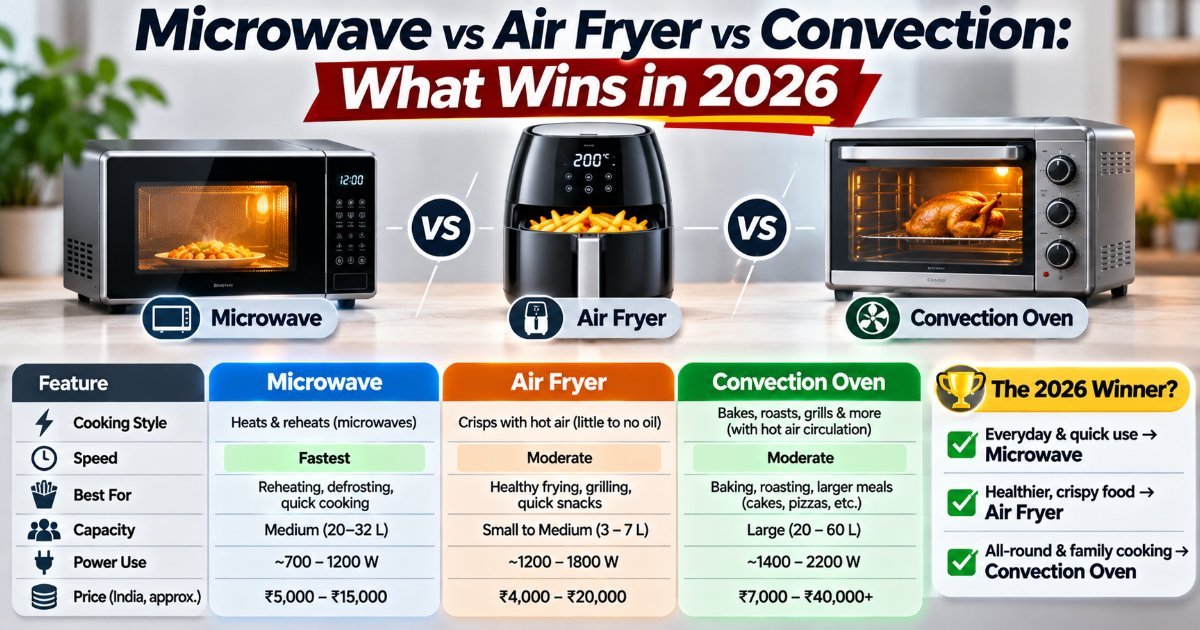
Microwave vs Air Fryer vs Convection: What Wins in 2026
Three appliances, one countertop, and a lot of overlap. Here's what each one genuinely does best in 2026 — and the combo you should probably skip.

Appliance Software Updates: Why They Matter Now
Your washing machine has firmware. Your oven has a network card. Here's how to keep appliance software updates from becoming a weekend project.

Appliance Lifespan: How Long Stuff Actually Lasts
Your grandmother's refrigerator ran for 30 years. Your fiveyearold washer just quit, and the repair quote is $700. What changed? Modern appliance lifespan is…