
Pakistan Drone Warfare: Army's Tech Confidence Explained
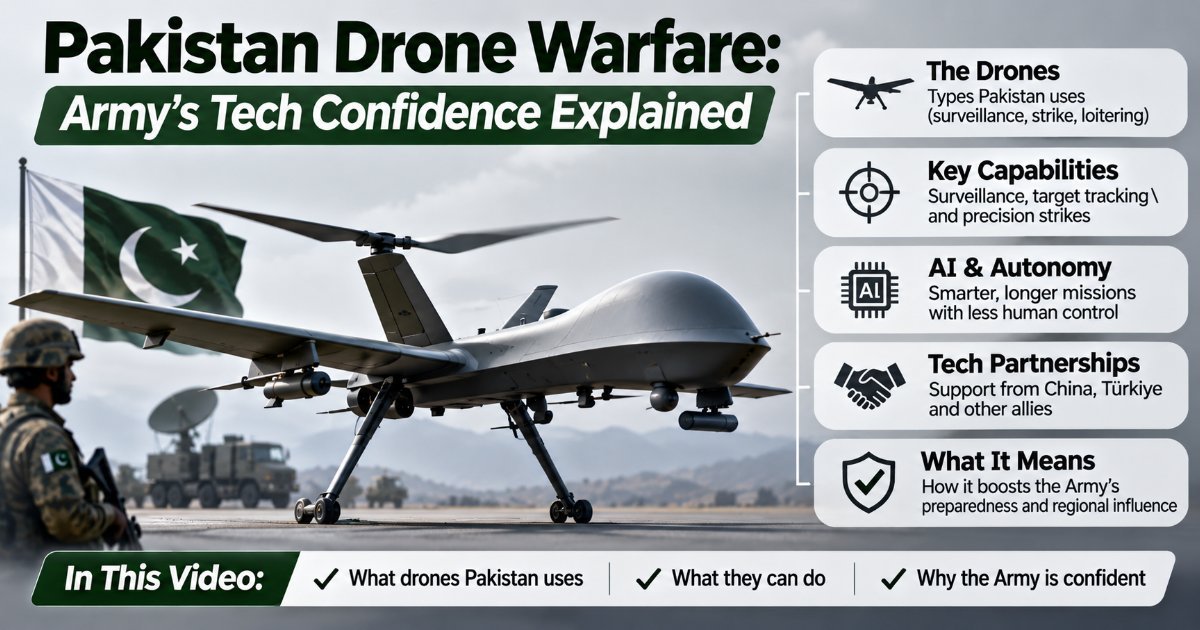
Drones stopped being a sci-fi prop the moment cheap quadcopters started knocking out tanks in Ukraine. So when Pakistan's military media chief stands up and says the army is ready for that kind of fight, it's worth a closer look — and worth reading past the slogan.
Here's the short version of what happened: the Director General of Inter-Services Public Relations — the military's public-facing media wing — described the force as a "technology-savvy army" and expressed confidence in its operational readiness when it comes to drone warfare. That's the headline. What it isn't is a spec sheet, a budget line, or a procurement list. And that gap is exactly where the interesting story lives.
What was actually said — and what wasn't
The statement is a confidence claim, not a disclosure. No platforms named, no timelines, no numbers. That's normal for a media briefing, but it means you should treat it as a posture signal rather than a capability audit.
There's also a genuine ambiguity in the phrase "readiness to drone warfare." It can mean two very different things:
- Fighting with drones — armed UAVs, loitering munitions, reconnaissance swarm tactics.
- Fighting against drones — counter-UAV jamming, air-defence guns, radar nets over sensitive sites.
The first gets the headlines. The second is where most modern militaries are quietly spending their money, because a $2,000 drone that slips past a billion-dollar air-defence umbrella is the cheapest embarrassment in warfare right now.
Where Pakistan's drone story actually stands
This isn't a standing start. Pakistan has spent over a decade building an indigenous unmanned aircraft base through its state defence conglomerates — the Shahpar family of UAVs and armed systems like Burraq have been publicly displayed at defence expos for years, and local engineering universities feed a steady pipeline of graduates into that work. Reports over the past few years have also pointed to interest in Turkish drone systems, which have become the default export choice for a lot of middle-income militaries.
Meanwhile the neighbourhood has its own momentum. India has been pushing toward high-altitude, long-endurance drones, including US-made platforms, alongside a domestic UAV programme. Two nuclear-armed neighbours buying into the same technology isn't a recipe for stability — it's a recipe for a new layer of tension that nobody has written rules for yet.
That's the honest comparison: neither side is inventing drone warfare. Both are importing and assembling it, then racing to figure out how to defend against what the other just bought.
Why this matters even if you never touch a drone
You might reasonably ask why a briefing about military readiness belongs on a tech blog. Three reasons.
Money. Every rupee or dollar that goes into a drone programme comes out of a budget that also funds schools, hospitals and power grids. Defence procurement rarely gets itemised for the public, and in a country where the military's economic footprint is already a live political argument, "we're technology-savvy" is a spending signal, not just a morale line.
Airspace and privacy. As military UAV use normalises, civilian rules get shaped in its shadow. Pakistan's civil aviation authority has been tightening drone registration and no-fly enforcement for years, and every high-profile military drone mention tends to make regulators twitchier. If you fly a camera drone for weddings, real estate or YouTube, the regulatory weather gets a little colder each time.
Jobs and skills. A "technology-savvy army" needs embedded software engineers, RF specialists, image-processing people and maintenance crews. That's a real employment lane — and it competes with the private tech sector for the same small pool of talent.
The hype check
Impressive: the intent. A military publicly naming drone warfare as a readiness priority is a meaningful shift from treating UAVs as a niche reconnaissance toy. It signals that planners have watched the last few conflicts and drawn the right conclusion.
Overhyped: the word "confidence." Confidence is free. What's expensive is electronic warfare, counter-jamming, encrypted datalinks, and the boring logistics of keeping a fleet flying when spares are sanctioned or delayed. None of that showed up in the statement.
Also worth flagging: claims of readiness from any military media wing should be read the way you read a company's product launch keynote — directionally useful, unverified in the specifics.
What to watch next
- Whether future briefings name specific platforms or domestic production milestones instead of general confidence.
- Any movement on counter-drone defences around airbases and strategic sites.
- Civil aviation rule changes for hobbyist and commercial drone pilots.
- Whether the rhetoric is matched in the next defence budget with visible UAV or electronic-warfare line items.
The bigger trend here is simple: drone warfare has gone from a superpower specialty to something every regional military feels obliged to have an opinion about. The armies that get this right won't be the ones with the flashiest UAVs — they'll be the ones that can jam, spoof and shoot down someone else's.
Key Takeaways
- Pakistan's DG ISPR called the army "technology-savvy" and voiced confidence in drone-warfare readiness, without naming platforms or timelines.
- The phrase covers both offensive drones and counter-drone defence — the second matters more than the first.
- Pakistan has a decade-plus of indigenous UAV development and has reportedly looked at Turkish systems.
- Ordinary readers should watch defence budget line items, counter-drone deployments and civilian drone regulations.
- Confidence claims are directionally interesting but not evidence of capability.
Frequently Asked Questions
What did the DG ISPR say about drone warfare? The military's media chief described Pakistan's army as a "technology-savvy army" and expressed confidence in its operational readiness for drone warfare. No specific systems, numbers or timelines were disclosed alongside that claim.
Does Pakistan have its own military drones? Yes — state defence organisations have publicly displayed indigenous UAVs including the Shahpar series and armed systems for years. Reports have also pointed to interest in Turkish drone platforms, though details of any deals are rarely confirmed officially.
What does drone warfare mean for civilians in Pakistan? Mostly indirect effects: budget priorities, tighter rules on private drone flying, airspace restrictions near sensitive areas, and new technical job categories. Your wedding videographer is more likely to feel it than you are.
How did this story feel?
Be the first to react
Written by
TechPulse Team
The TechPulse editorial team publishes clear, practical technology guides. Every article is original and written to be understood — not just skimmed.
Comments (0)
No comments yet — start the conversation!
Keep reading

Cool New Gadgets: How to Read a Roundup
A list of 17 cool new gadgets is trending. Here's how to read it critically — and avoid wasting money on hype.

Cyril Hilsum, Flat-Panel Display Pioneer, Dies at 101
Cyril Hilsum, the British physicist who spent decades pushing flat-panel displays when CRTs ruled, has died at 101. His work is in every screen you own.

Smartwatch Sensors Explained: What Your Wrist Actually Measures
A sensor-by-sensor breakdown of what's actually in your smartwatch — heart rate, SpO2, ECG, GPS — with honest pros, cons, and what to care about.