
Android vs iPhone Updates: Who Really Supports You Longer?
A 2019 iPhone 11 still runs the newest iOS. A Galaxy S10 from that same year stopped at Android 12 and never moved again. Two phones, same launch window, completely different endings.
That gap used to be a punchline. Now it's mostly closed — but only if you buy the right Android. So let's talk about Android vs iPhone updates honestly, because every manufacturer's press release sounds identical and the real answer depends on the exact model in your hand.
The short version, before the weeds
Apple supports iPhones for roughly five to seven years, and it doesn't publish a formal promise. Google and Samsung now promise seven years on their flagships. Everyone else sits somewhere between two and six.
That's the whole story in three sentences. The interesting part is what those promises actually cover.
Android vs iPhone Updates: The Real Numbers
Here's a comparison table. Read the "notes" column, not just the big number — that's where the catches live.
| Phone family | OS upgrades | Security patches | Notes |
|---|---|---|---|
| iPhone (recent models) | ~5–7 years | Same window | No published guarantee; historically generous |
| Google Pixel 8 and newer | 7 years | 7 years | Includes Feature Drops |
| Samsung Galaxy S24/S25 and newer | 7 years | 7 years | Flagships only |
| Samsung Galaxy A-series | 4–6 years | 5–6 years | Varies a lot by model |
| OnePlus 13, Xiaomi 15 | 4 years | 6 years | Recent flagships |
| Budget Androids | 2–3 years | 2–4 years | The real weak spot |
As of this writing, that's roughly where things stand. Check the specific model page before you buy — manufacturers quietly revise these.
What Apple actually gives you
Apple never says "we support iPhones for six years" on a box. It just does it, year after year, and the pattern is remarkably consistent. The iPhone 6s shipped with iOS 9 and finished on iOS 15. The iPhone XR launched on iOS 12 and made it to iOS 18.
Here's the underrated part: everyone gets the update on the same day. No carrier approval queue, no "rolling out in phases" limbo. You wake up, the update is there, and it's the same build your friend in another country just installed.
My honest take? Apple's approach is less about generosity and more about control. It owns the whole stack, so it can. But you benefit either way.
Samsung and Google changed the game
For years, the standard Android answer was "two years of OS updates, maybe three if you're lucky." Then Google announced seven years of support for the Pixel 8 in 2023, and Samsung matched it for the Galaxy S24 line a few months later.
Seven years. That's not a marketing rounding error — it's a genuine shift. A Galaxy S24 bought in 2024 should see security patches into 2031.
Two caveats worth knowing. First, this applies to flagships. A Galaxy A55 gets four OS upgrades and five years of patches — decent, but not the same deal. Second, the EU now requires at least five years of security updates after a phone stops being sold, so budget Android support is legally improving in Europe. Elsewhere, it depends on the brand's mood.
The catch nobody puts on the spec sheet
Long update promises are great. They also create a problem: a phone you keep for seven years needs a battery replacement somewhere around year three or four.
Check two things before you commit to a long-term phone. Can you get the battery replaced at a reasonable price? And does the phone have enough storage to survive seven years of OS growth and photo accumulation? (A 128GB phone in 2026 is a 128GB phone in 2032, and iOS and Android both keep getting bigger.)
If you're planning to keep a phone past year four, buy more storage than you think you need. That's the single most common regret I hear.
What about budget Android phones?
This is where I'll push back on the optimism. A $200 Android phone with two years of OS updates isn't a scam, but it isn't a long-term purchase either. Treat it as a three-year device and budget accordingly.
If you want a cheap phone that lasts, look for the specific promise in writing. Samsung's A-series listings state their update commitment. So do Google's. If a product page doesn't mention it at all, assume the minimum.
Why iPhone update support still wins on one point
Apple doesn't segment features as aggressively as Android OEMs do. When iOS 26 arrives, an iPhone 11 gets essentially the same interface and most of the same features as an iPhone 17.
Android is messier. Samsung's One UI, Google's Pixel skin, and a budget brand's launcher all age differently. Feature Drops on Pixel are genuinely nice. Mid-range Android skins often get security patches without any of the new stuff.
So the honest answer to "which gets better updates" splits in two. On raw years, Google and Samsung now match or beat Apple on paper. On the experience of receiving those updates, iPhone is still smoother.
So which should you buy?
If you keep phones for five-plus years and want zero research: buy an iPhone or a Pixel. Both are safe bets, and the Pixel is the better value for the money if you like Android.
If you want a Samsung flagship, buy the S24, S25, or newer — the seven-year promise is the whole reason. Skip older S-series models on discount; you're buying years you'll never get back.
And if you're spending under $300? Go in with a three-year mindset and you'll be happier. (Yes, I know that's not what the ads say.)
Key Takeaways
- Apple supports iPhones roughly five to seven years without a formal written guarantee.
- Google Pixel 8 and newer, plus Galaxy S24 and newer, promise seven years of OS and security updates.
- Budget Androids are still the weak spot — often two to three years of OS upgrades.
- Everyone gets iOS updates on the same day; Android rollouts vary by country and carrier.
- Plan for a battery replacement around year three or four if you keep a phone long-term.
- Buy extra storage if you intend to use a phone past year four.
Frequently Asked Questions
How many years of updates do iPhones get?
Around five to seven years in practice. Apple doesn't publish a fixed number, but the pattern is consistent — the iPhone XR from 2018 received updates through iOS 18 in 2024, and the iPhone 11 from 2019 is still supported today.
Does Samsung really give 7 years of updates?
Yes, for Galaxy S24, S25, and newer flagships — seven years of OS upgrades and security patches. Mid-range and budget Samsung phones get less, usually four to six years, so check the specific model before buying.
Do Android phones get updates as fast as iPhones?
No, and this is Android's weakest point. iPhone updates ship worldwide on day one. Android updates roll out in phases by region and sometimes need carrier approval, so you might wait weeks or months after the announcement.
How did this story feel?
Be the first to react
Written by
TechPulse Team
The TechPulse editorial team publishes clear, practical technology guides. Every article is original and written to be understood — not just skimmed.
Comments (0)
No comments yet — start the conversation!
Keep reading
Night Mode Photography: How It Really Works
Night mode isn't a sensor trick — it's a stack of frames and a lot of math. Here's how the big phone brands do it, and where each one falls apart.
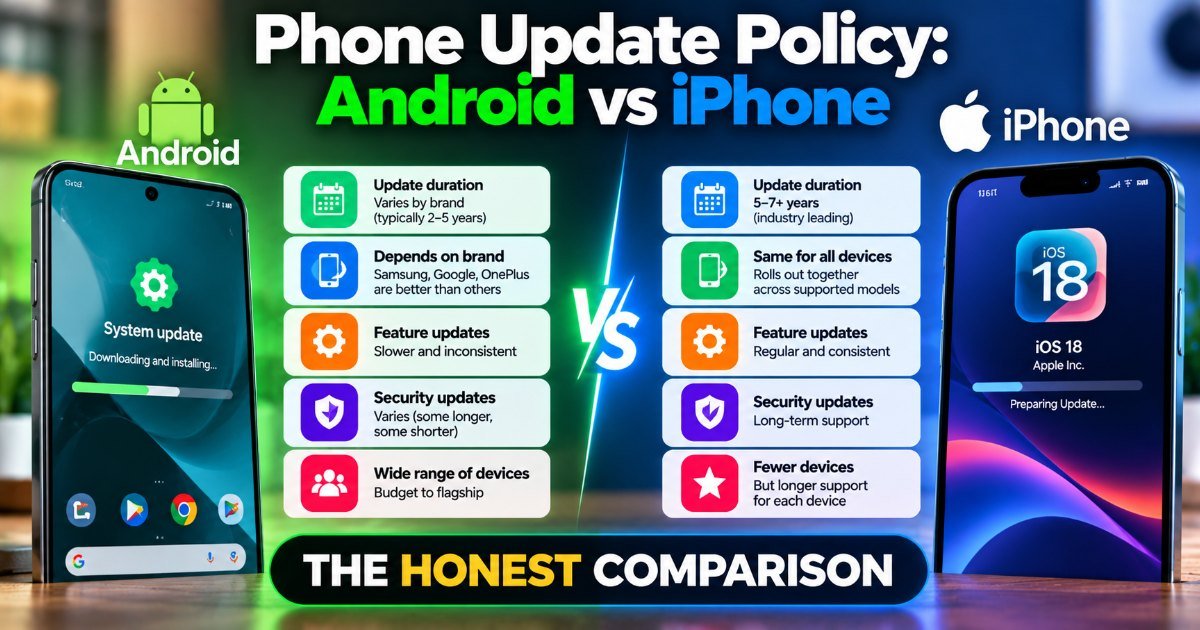
Phone Update Policy: Android vs iPhone — The Honest Comparison
How long does your phone actually get updates? Android vs iPhone compared honestly — update lengths, real-world testing, and what to expect before you buy.
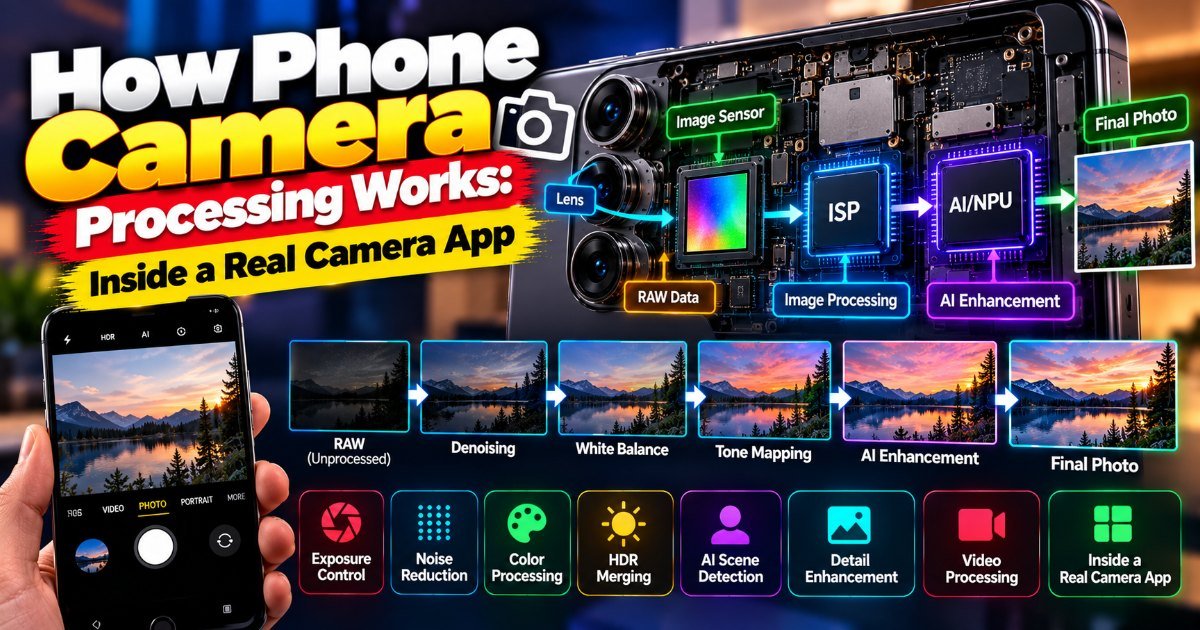
How Phone Camera Processing Works: Inside a Real Camera App
You're at a concert. The stage lights are a mess — deep blues, harsh reds, and the singer's face lost in shadow. You raise your phone, and the screen shows…